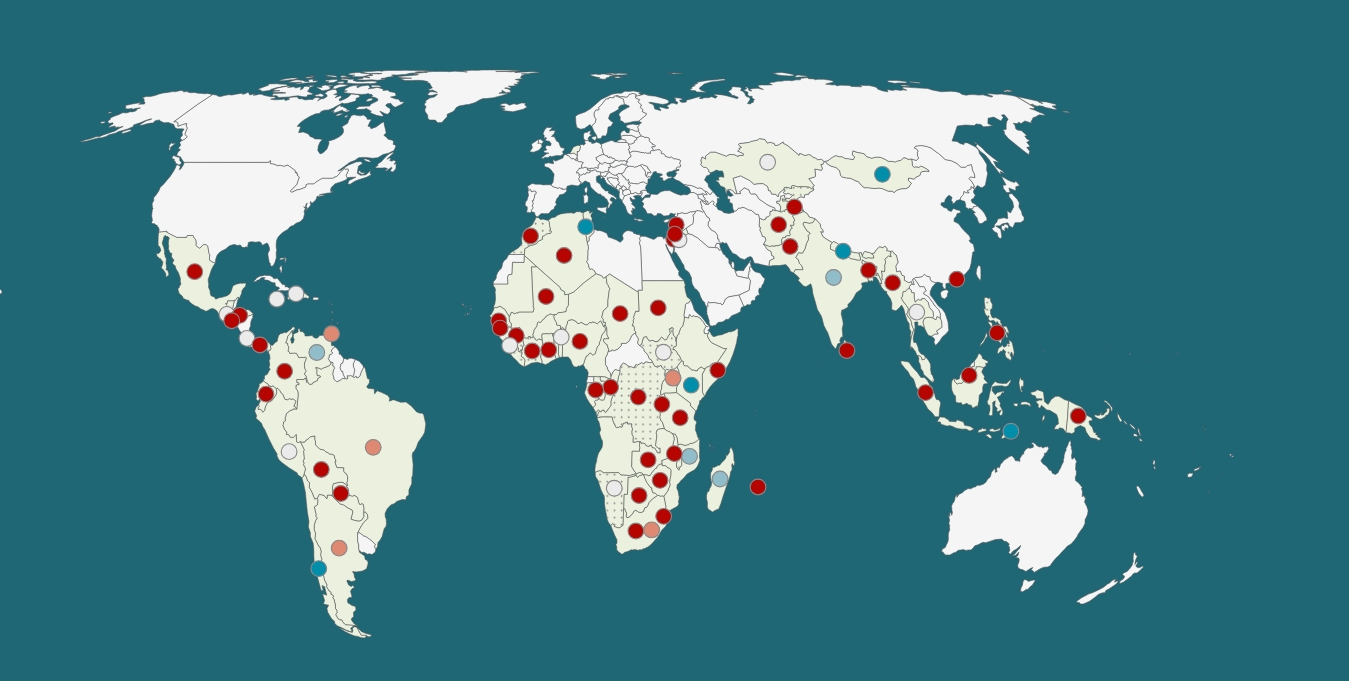
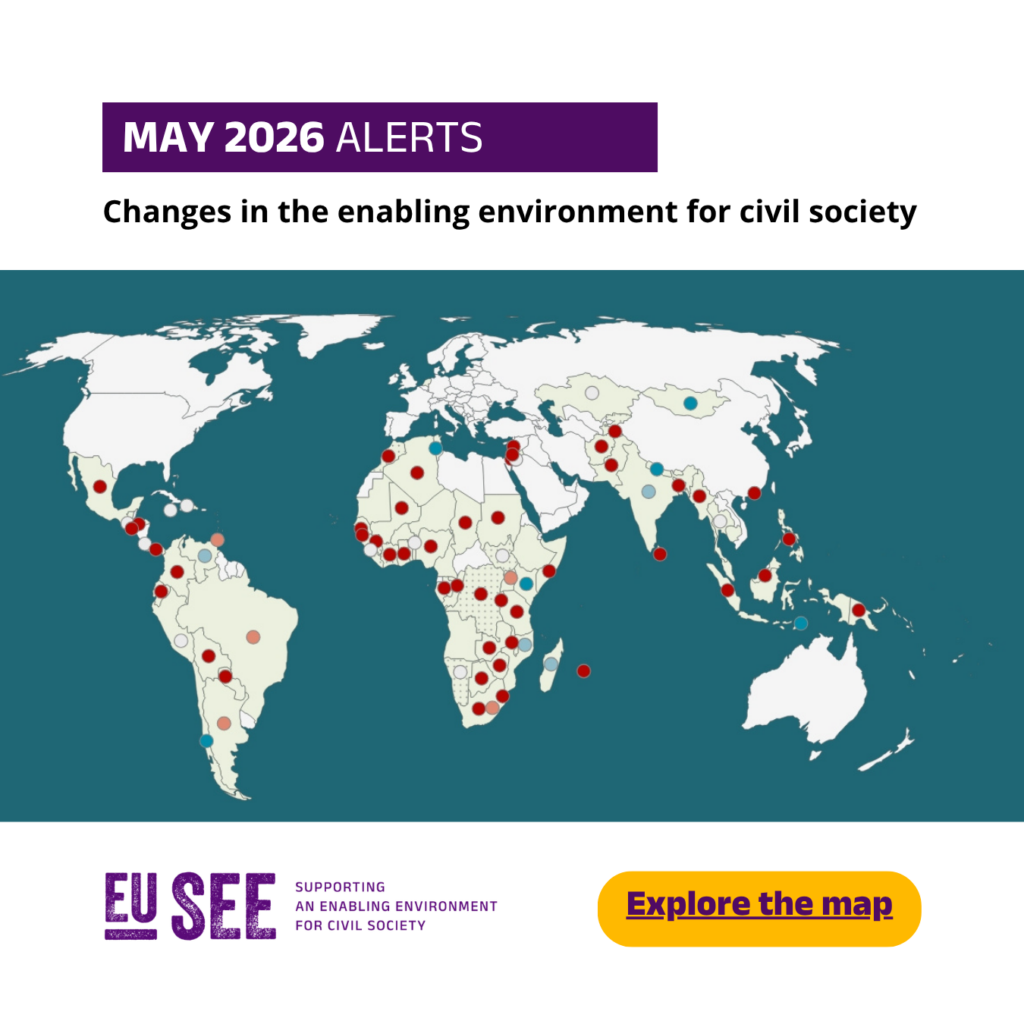
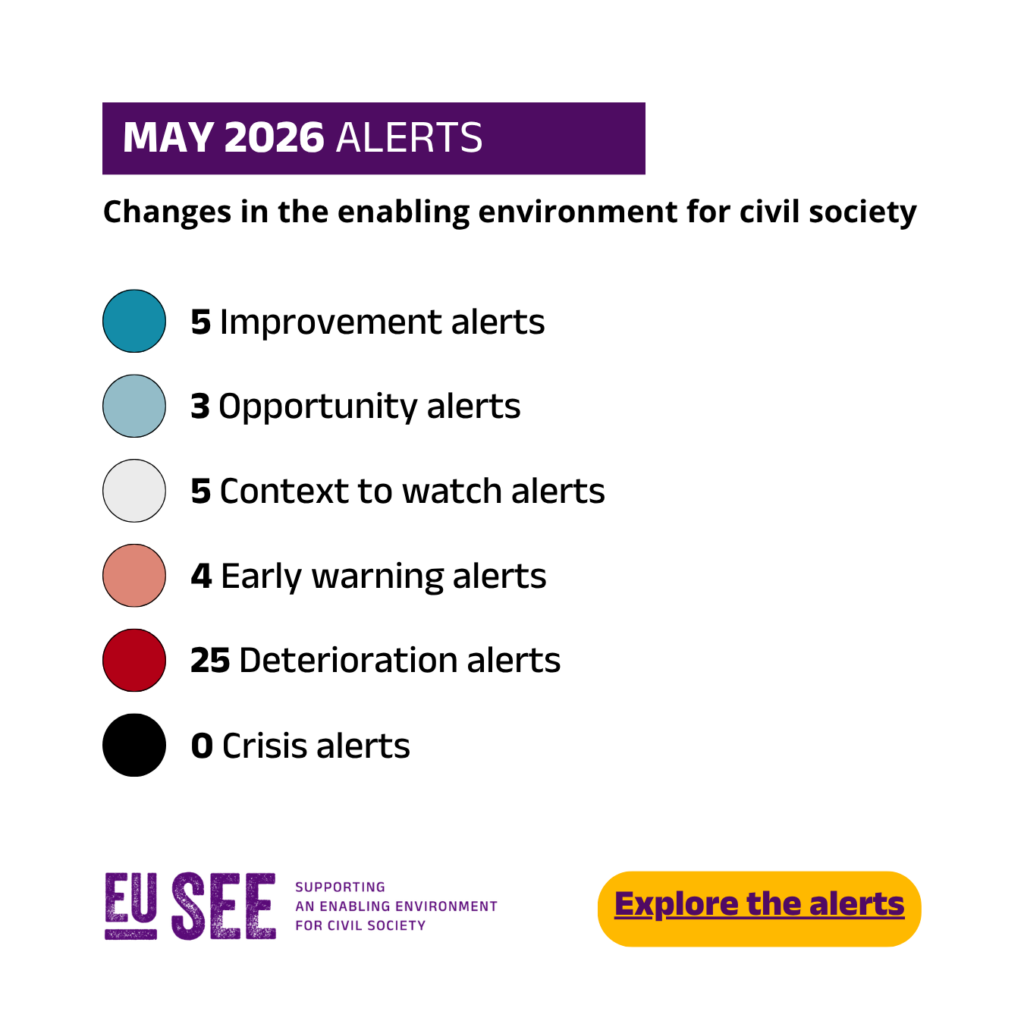
May 2026 was characterised by a convergence of electoral insecurity, digital repression, institutional manipulation, and escalating hostility toward civil society and independent media. EU SEE alerts demonstrated how governments and other powerful actors deployed legal restrictions, coercive administrative measures, and political discourse to shape public space and constrain dissent. On the positive side, some participatory governance initiatives were reflective of continued opportunities to widen civic space, these were overshadowed by a broader pattern of weakening safeguards, and rising risks for participation and accountability.
Regulatory Measures as Instruments of Civic Space Restriction
May saw continued expansion of regulatory and administrative controls that directly affect civil society’s operational capacity and autonomy, not only in the political arena but also across wider civic institutions.
In Ecuador, the reported closure of the National Union of Educators’ bank accounts marks a further escalation in the use of financial restrictions as a punitive tool, raising concerns about economic sanctions being deployed against critical actors. Similarly, in Zambia, the adoption of the Public Gatherings Bill introduces expanded state discretion over assemblies, with civil society warning that the law could restrict advocacy, protest, and electoral mobilisation. The late postponement of RightsCon by the Government disrupted a major global digital human rights event, raising concerns about excessive government influence over civil society spaces.
In Malawi, the politically sensitive redeployment of the NGO Regulatory Authority (NGORA) CEO provided an example of the politicisation of regulatory institutions, undermining trust in oversight bodies. Parallel anxieties about regulatory tightening were evident in Guinea‑Bissau, where a law on “false information” adopted by a transitional body risks enabling broad criminalisation of online content under weak constitutional legitimacy, restricting civic space in the digital world.
Escalating Pressure on Civil Society, Activists, and Collective Action
May’s alerts demonstrated a sustained pattern of intimidation, repression, and delegitimisation of civil society actors, undermining principle 5 of the EU SEE, supportive public culture and discourses on civil society.
In Bolivia, a coordinated smear campaign targeting NGOs supporting indigenous protests illustrates how governments increasingly use stigmatising rhetoric and threats of investigation to delegitimise organisations, threatening future legal or administrative crackdowns to ward off criticism. A similar pattern of rhetorical hostility was seen in Jamaica, where a minister openly threatened civil society actors in response to calls for police accountability.
In Indonesia, the proposed creation of a government‑led “assessment team” to determine who qualifies as a human rights defender raised serious concerns about state control over civic legitimacy, furthering the narrative that civil society actors are questionable actors.
In Tanzania, official rhetoric framing youth activism (Gen Z) as a threat to order is emblematic of attempts by politicians to delegitimise social movements and civil society actors.
Electoral Integrity, Political Participation, and Democratic Processes Under Strain
Electoral governance emerged as a central area of concern, with multiple alerts highlighting violence, exclusion, and institutional manipulation.
In Colombia, escalating violence that includes killings, threats, and armed group interference posed serious risks to the integrity of the presidential elections. In Somalia, the collapse of political negotiations on constitutional and electoral reforms deepened institutional fragmentation and uncertainty ahead of elections.
Electoral and governance processes were also undermined at institutional levels. In Guatemala, irregularities in university elections and in the selection of electoral tribunal magistrates raised concerns about transparency, external influence, and long‑term democratic stability. In Thailand, 44 former MPs faced potential lifetime bans, illustrating punitive measures against political reform efforts.
Professional and civic participation mechanisms were also restricted. In Bangladesh, lawyers were barred from bar association elections based on alleged political affiliation, while in the West Bank, civil society operations were directly disrupted through closures, arrests, and settler violence affecting organisations linked to service provision and rights advocacy.
Policy Decisions Reshaping Rights, Inclusion, and Civic Participation
Beyond overt repression, May’s EU SEE alerts demonstrated how policy shifts and institutional decisions reshape civic space in structural ways.
In Lesotho, the exclusion of persons with disabilities from meaningful participation in census processes raised concerns about systemic marginalisation and weak consultation practices.
There were examples of positive developments in this area. In Costa Rica, the Constitutional Chamber ordered the Government to implement of access‑to‑information regulations, strengthening transparency frameworks. In Indonesia, the long‑awaited Domestic Workers Protection Law marked a significant victory following decades of civil society advocacy.
May Country Focus Reports and Snapshots
- Kazakhstan Country Focus Report
- Senegal Rapport National
- Haiti Country Focus Report
- Honduras Enabling Environment Snapshot (Spanish)
- India Enabling Environment Snapshot
- South Sudan Enabling Environment Snapshot
- Argentina Enabling Environment Snapshot (Spanish)
- Brazil Enabling Environment Snapshot
- Eswatini Enabling Environment Snapshot
- Pakistan Enabling Environment Snapshot
- Costa Rica Panorama del Ambiente Habilitante