This article was published as part of the EU SEE by European Partnership for Democracy, available originally on the European Democracy Hub
Civil society across Latin America is under growing strain. While this is a global trend, the region has come under particular pressure following shifts in US foreign policy under the Trump administration. Even so, civil society organisations continue to play an important role in building democratic resilience and responding to changing environments. Renewed European engagement is needed to counter the consequences of these policy shifts and support a region that still has vibrant democratic potential.
Civil society is under strain globally, and Latin America is no exception. Over the past year, concerns about the future of civil society have intensified across the region. Civil society faces growing uncertainty in terms of funding and international cooperation, while civic space is increasingly restricted. Governments have expanded oversight, tightened regulations, and placed greater scrutiny on civil society actors.
However, Latin America has come under particular pressure after shifts in US foreign policy since President Donald Trump’s return to power. The Trump administration has stepped away from promoting democracy globally and cut funding for the US Agency for International Development (USAID). Notably, in a move that has affected Latin America specifically, the administration has renewed its emphasis on the Monroe Doctrine by introducing a new Trump corollary, raising concerns about increased US interventionism in the region.
While Trump’s policies are not the root cause of the challenges facing Latin American civil society, they add to increasing pressure on already restrictive environments, creating multidimensional tensions that amplify existing vulnerabilities. Civil society’s strength persists in innovative forms of collective action, new networks, and grassroots mobilisations across the region. As this strength is tested in unprecedented ways, however, the need for European support for democracy is growing. Yet European engagement is constrained by the restructuring of development aid, the prioritisation of security and trade agreements, and the sidelining of pro-democracy domestic civil society.
With a rightward shift visible in several recent elections across Latin America, the future of the region’s democracy hangs in the balance. This balance can still be shifted in a positive direction if European pro-democracy actors champion an enabling environment for civil society as a fundamental building block of democratic infrastructure.
Domestic pressures and external shock waves
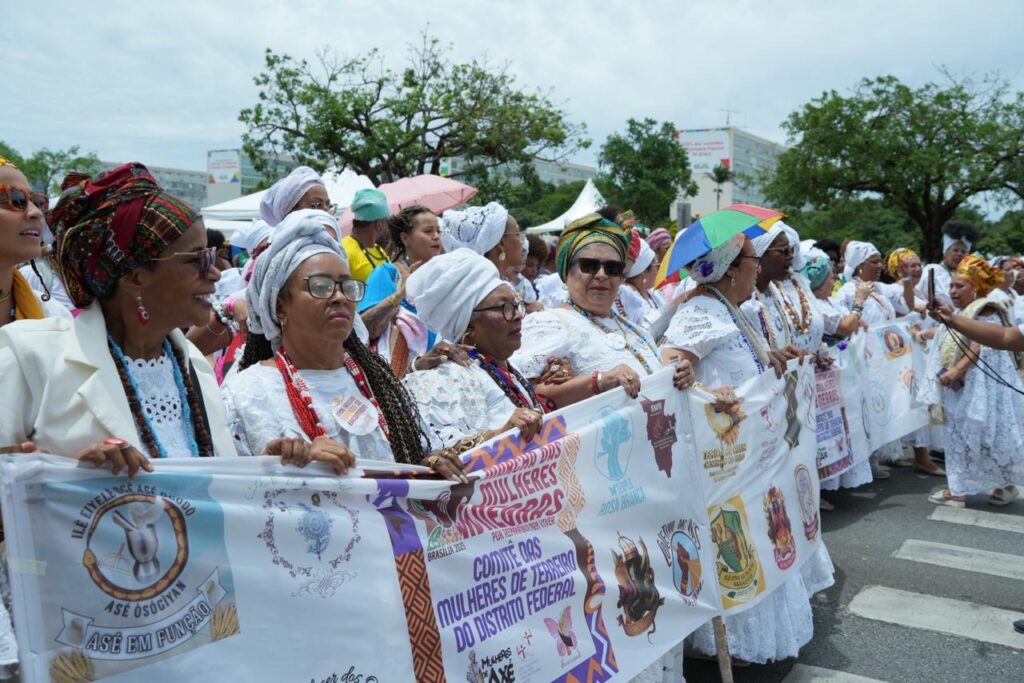
The US retreat from global democracy promotion, Trump’s attack on multilateral institutions, and his support for far-right political actors have opened a window of opportunity for autocratising governments to further restrict civic space. The political alignment of some Latin American governments with the Trump administration has created additional pressure on the enabling environment for civil society.
When autocratising governments receive political endorsement or support from Trump, this sends a strong signal not only that crackdowns on civil society and human rights might go unpunished but also that further repressions may be tolerated. As the key US ally in Latin America, El Salvador’s President Nayib Bukele has benefited from the Trump administration’s support, especially since Bukele allowed deported Venezuelan migrants from the US to be housed in El Salvador. The US administration has endorsed Bukele’s government, enabled its human rights violations, and even signed a reciprocal trade agreement.
Trump has openly supported right-leaning candidates in major national elections across the region. In Colombia, Trump’s endorsement of far-right candidate and now President Abelardo de la Espriella deepened polarisation and raised concerns of US meddling during the election. Trump also publicly endorsed the candidacy of Honduran President Nasry “Tito” Asfura, an ally of the US administration. Civil society saw this move as election interference by a foreign government and denounced it for creating a hostile environment for organisations that defend democracy and free elections in Honduras. The Trump administration has also been a close ally of Argentina’s President Javier Milei, pledging financial support. Milei’s coming to power in 2023 marked the start of deteriorating freedom of expression in Argentina and increased regulatory demands on civil society organisations (CSOs).
In Venezuela, initial hopes for a potential window of opportunity to reopen civic space through US military intervention against the authoritarian regime have not yet yielded any signs of democratic transition. Nevertheless, the US and Venezuela re-established diplomatic and consular ties, and Trump recognised Delcy Rodríguez – former President Nicolás Maduro’s vice president – as the country’s new head of state. The US prioritised building a new framework for economic relations with the Venezuelan authorities and struck a major deal over the country’s oil resources. In contrast, there has been no push to reverse restrictions on civic space, including an anti-NGO law adopted in 2024. While Venezuela is still grappling with a humanitarian crisis following unprecedented earthquakes on 24 June 2026, the prospects for free and fair elections remain uncertain.
In some countries, opportunities for international advocacy and cooperation have narrowed as governments align with Trump’s foreign policy, which often questions the value of multilateral cooperation. Following this logic, Milei’s government withdrew from the UN Human Rights Council and the World Health Organisation (WHO). These moves have raised concerns across Argentina’s civil society. Withdrawal from the WHO undermines civil society’s ability to protect public health and fill gaps left by the state. It further limits access to information and international funding. Civil society in Argentina has warned that this move may worsen health risks for vulnerable communities.
Refusing to align with US foreign policy is also costly, and geopolitical tensions arising as a consequence have affected civil society. Earlier this year, it was reported that the US has been intensifying pressure on Mexico to allow US military forces into its territory to dismantle fentanyl labs. Geopolitical tensions between the US and Mexico create a challenging environment for groups and organisations that work on migration and human rights along Mexico’s northern and southern borders, where controls have been increased by the military presence and efforts to limit migration to the US.
In some countries, civil society has mobilised against Trump’s interventionist approach. While Argentinian authorities openly endorsed the US military operation to capture Maduro, in Mexico and Colombia large protests condemned Trump’s move. Increased economic pressure from the Trump administration on the Cuban regime has yielded few results for the human rights and democracy situation on the island; the regime has tightened its grip on the population, which is suffering the worst humanitarian crisis in decades as a result of Trump’s sanctions. Cuba and Venezuela are clear examples that Trump’s hardline policies, which many viewed as potential leverage points against encroached authoritarian regimes, serve exclusively US interests and deliver little in terms of democratic improvements for Latin American populations.
Among the most significant changes introduced by Trump’s second administration have been the cuts to USAID funding and the broader dismantling of US democratic assistance. These actions have disrupted support structures throughout Latin America and sent shock waves through civil society. It is estimated that over 84% of USAID assistance to Latin America and the Caribbean has been eliminated. Evidence from the EU System for an Enabling Environment for Civil Society (EU SEE) shows that cuts in US cooperation have jeopardised the work of many organisations. In Mexico, foreign funding for CSOs fell by half within a year of the USAID cuts, affecting those working on human rights, migration, and democracy.
In El Salvador, the combination of the withdrawal of US cooperation and restrictive laws leaves civil society in a precarious situation. A state of emergency has been in effect in El Salvador since 2022, and in 2025 the country adopted a foreign agents law. As a result, CSOs are either closing down or suspending their operations. In Peru, too, cuts in foreign funding have been followed by further restrictions on the regulatory environment, with authorities adopting a law that increases state control over CSOs with foreign funding and penalises advocacy and strategic litigation against the state.
The Trump administration’s decision to dismantle USAID has opened new avenues to stigmatise foreign funding more broadly. Various authorities in Latin America, including in Ecuador, El Salvador, and Peru, have used USAID funding cuts as an opportunity to double down on negative discourse against civil society. Civil society actors across countries are often portrayed as foreign agents, criminals, enemies of the people, and obstacles to development and national security. Even in countries that have shown signs of reopening participatory spaces, such as Brazil, narratives about “foreign interference” particularly target those who work on Indigenous and environmental issues.
The withdrawal of US aid has also deepened structural inequalities across Latin America. In Honduras, a particularly affected group is women and girls, for whom safety nets and programmes to protect them from violence have been shut down. The impact is visible in other sectors as well. For instance, in Guatemala, projects suspended because of USAID cuts focused on health, migration, education, governance, and the environment. In Peru, USAID funding was frozen for projects that aimed to combat HIV/AIDS, illegal mining, and wildlife trafficking.
In Colombia, the cuts have affected the peace accords with the FARC guerrilla group, as 42% of the aid for implementation of the deals, including reintegration and anti-radicalisation programmes, used to be provided through USAID. This is endangering the fragile peace process in a country with high levels of political violence. In Brazil, humanitarian organisations face uncertainty or have been forced to suspend their activities, which include the provision of social integration, emergency water, sanitation, and hygiene services to migrants and vulnerable populations.
Democratic resilience in Latin America
These challenges paint a troubling picture of the enabling environment for civil society in Latin America. Yet focusing exclusively on the challenges risks overlooking a more fundamental question: what role does civil society play in helping democracies withstand and respond to such pressures?
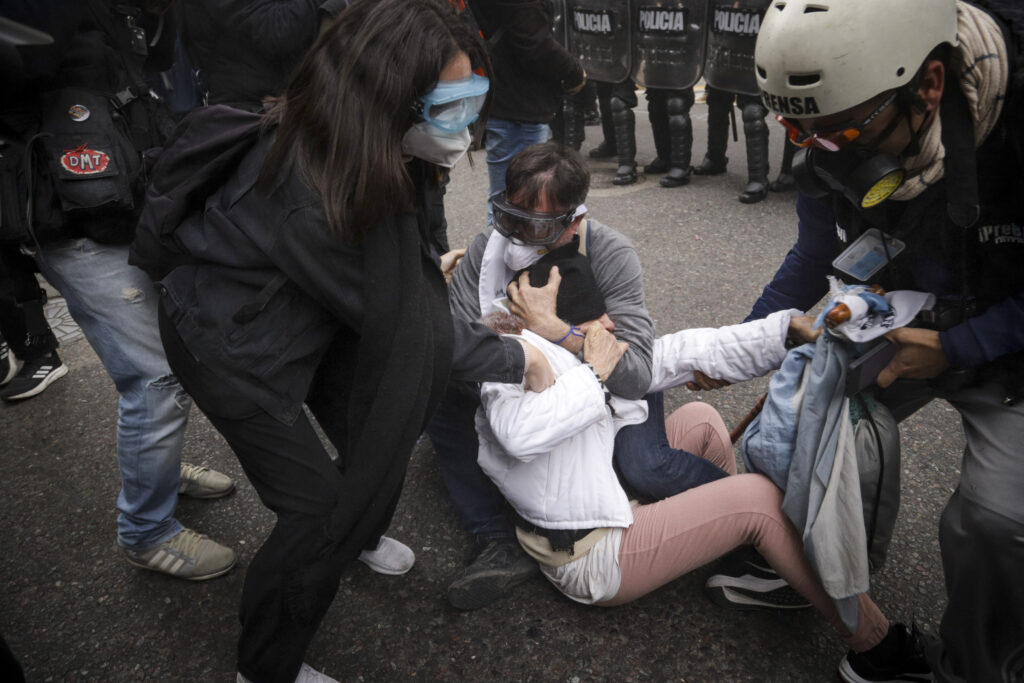
This question is particularly important in Latin America. Over the last four decades, CSOs have been among the region’s most important democratic actors. They have contributed to democratic transitions, expanded political inclusion, made governments accountable, exposed corruption, and created new forms of citizen participation. In recent years, CSOs have been central drivers of democratic innovations in the region, implementing hundreds of new institutional designs to strengthen democracy through citizen participation. Civil society has not merely demanded a better democracy; it has helped invent it.
The Latin American experience is therefore also a story of innovation and resilience. CSOs have operated under military dictatorships, survived economic crises, and adapted to democratic backsliding. And they have often done so not only by defending democracy but also by creating new democratic practices.
As the enabling environment comes under attack, recent research shows that Latin American civil society has actively contributed to democratic resilience through three interconnected functions.[1]
The first relates to knowledge. CSOs produce, verify, and disseminate knowledge. They generate reliable information by conducting investigations, monitoring digital media, fact-checking public claims, and creating data where official information is lacking. They help citizens navigate increasingly complex information environments shaped by disinformation and declining trust.
For example, in Brazil, CSOs work with residents of underserved urban communities to generate their own data, revealing discrepancies between official statistics and lived realities and making previously invisible problems visible to citizens and policymakers. In Chile, CSOs have tracked how disinformation campaigns emerge, spread, and evolve across digital platforms, helping citizens recognise recurring patterns and techniques of manipulation.
The second function relates to mediation. CSOs in Latin America connect citizens to institutions and to their own communities. They advocate for public interests by monitoring governments, enabling cooperation across sectors, and creating channels through which citizens can participate in public life. They help bridge social and political divides, fostering dialogue in contexts marked by polarisation and mistrust.
For instance, in Chile, CSOs monitor how governments and digital platforms respond to disinformation, scrutinising draft laws and bringing civil society concerns about fundamental rights into institutional and public debates. In Colombia, CSOs have also created spaces for dialogue across political and social divides, bringing together people with different perspectives to reduce polarisation and foster mutual understanding.
The third function relates to democratic norms and values. Latin American CSOs strengthen democratic principles and practices by providing civic education, encouraging critical engagement with information, promoting participation, building trust, and creating inclusive narratives that reinforce democratic norms. They contribute not only to what citizens know but also to how they understand democracy and engage with it.
In Colombia, for example, civic education programmes combine learning about democratic institutions with practical experiences of participation, including simulated elections that allow young people to practise democratic decision-making. In Brazil, CSOs work with secondary schools to integrate political education into the curriculum, using participatory learning to foster active citizenship and strengthen democratic culture among younger generations.
Together, these three functions operate primarily through preventive rather than reactive strategies to strengthen democratic capacities before democratic erosion unfolds.[2] Resilience is built not during a crisis but before threats such as polarisation, disinformation, and attacks on political and judicial institutions put democracy at risk.
Democratic resilience thus emerges when citizens have access to reliable information, trust one another enough to engage across differences, and are connected to public institutions. It is built when democratic norms are continuously cultivated and defended, and democratic values and principles are taught to young generations. And this is precisely the work that CSOs carry out every day across Latin America.
Seen from this perspective, the challenges facing civil society in Latin America acquire a broader significance. When organisations lose resources, societies may lose trusted sources of knowledge. When civic actors become weaker, channels that connect citizens and institutions may disappear. When organisations working on inclusion and civic education come under pressure, democratic norms themselves may become more fragile.
Redefining support to Latin American civil society
Latin American civil society serves as an important reminder that despite growing domestic pressures and geopolitical shifts, democratic resilience can still prevail in various forms. Current European re-engagement with Latin America hardly involves civic space and does not sufficiently address mounting restrictions on civil society. This must change. To sustain and strengthen resilience, the European democracy-support community needs not only to step up its efforts but also to reconceptualise the meaning of “support”. This means putting an emphasis on protecting the enabling environment for civil society and equipping it with real actions.
The EU has maintained its humanitarian commitment to the region, although in terms of democracy support, EU contributions have been less substantial than those to other regions. Overall, Latin America receives the lowest allocations of EU external financial assistance of all regions: €3.4 billion under the Global Europe Instrument for the period 2021–27 out of a total of €60 billion allocated to geographic pillars.
Some EU members, such as Spain, have reaffirmed their support for Latin American democracy through a joint initiative on democracy support with Brazil, Chile, Colombia, and Uruguay. Spain still tends to allocate part of its development budget to democracy initiatives in Latin America, although current contributions, such as a €1.5 million programme on historical memory and post-conflict transition, do not respond to the needs of civil society in the context of narrowing civic space. Key development aid providers, such as Germany and Sweden, have also reduced their funding globally, including to Latin America. This convergence of US and European cuts is particularly challenging for Latin America, especially in the context of domestic and geopolitical tensions.
Supporters of European engagement with Latin America emphasise inter-regional dependence in terms of security, geopolitical competition with China, or economic connectivity. However, an enabling environment for civil society contributes to progress in all these areas and should not be neglected.
A strong civil society in Latin America is a prerequisite for Europe’s strategic goals in the region. Supporting civil society and strengthening its enabling environment should therefore run alongside wider political engagement frameworks with the region’s national governments. Political dialogue with Latin American countries should consistently emphasise the importance and benefits of the enabling environment for civil society. Multibillion-dollar infrastructure projects, such as the EU’s Global Gateway investment initiative, should strengthen civil society’s meaningful participation and its oversight role to ensure local ownership.
The same principles that are the foundation of an enabling environment for civil society, such as transparency, access to resources, respect for fundamental freedoms, and constructive state–civil society engagement, also create a climate in which business can thrive. Safeguarding these principles is therefore important for establishing the predictable, stable conditions needed to attract sustainable private-sector investment.
An active civil society and an open civic space are the centrepieces of resilient democracies in Latin America. They play a crucial, often frontline role in peace-building and improving the security environment in the region through de-escalation and engagement in conflict-affected areas. Civil society also engages with marginalised communities, especially young people, and is effective in preventing radicalisation and reducing recruitment into drug-trafficking networks and armed groups.
The Santa Marta Declaration – adopted at the 2025 summit of the Community of Latin America and Caribbean states (CELAC) and the EU – showed only a limited normative commitment to ensuring an enabling environment for civil society. At a time of growing global contestation of multilateralism, the summit declaration’s emphasis on embedding inter-regional partnership in values such as democracy, resilience, and inclusivity and on prioritising international legal frameworks and cooperation is a welcome addition.
For many Latin American civil society actors, multilateral frameworks represent strategic channels for participation and advocacy, notably through the Organization of American States (OAS) and the Inter-American Court of Human Rights, particularly as access to policymaking in national contexts narrows or closes completely. The Trump administration has in the past year undercut the role of the OAS as a regional cooperation body and democracy promoter by setting up separate associations with like-minded leaders in the region; such schemes include the Shield of the Americas coalition, geared towards using militaries to fight drug trafficking. The weakening of truly multilateral institutions will further reduce the remaining avenues for civil society. The EU should move beyond reaffirming its commitment to multilateralism and be more proactive in strengthening these mechanisms to withstand antiliberal attacks.
Renewed European engagement that embraces the importance of the enabling environment for civil society is thus needed to counter the consequences of Trump’s policies in Latin America, a region that still has vibrant democratic potential. While Europe may not be able to resolve all of the region’s challenges, supporting Latin American civil society, which continues to offer the EU a network of allies committed to democratic principles, remains a pathway for Europe to help defend democracy globally.
European donors should reform their funding practices to reflect the rapidly changing environment in Latin America, including the complex interconnections between domestic restrictions and external constraints. There is a need for funding structures that follow, rather than predetermine or redefine, civil society’s strategies on the ground. That means offering support mechanisms that are flexible enough to provide resources for fast-moving and self-organised movements. What’s more, strengthening the preventive actions of civil society should remain a priority. Civil society actors effectively identify emerging threats to the enabling environment, but they often lack the resources or support to halt its further deterioration.
The European democracy-support community should also prioritise providing help in tackling the physical, digital, and legal threats faced by civil society actors across Latin America. Human rights and democracy defenders, environmental activists, journalists, and community leaders in Latin America face some of the highest rates of assassination, harassment, and forced displacement in the world. European donors should establish and maintain robust protection mechanisms, including emergency relocation support, digital security training, and tools to counter unlawful surveillance. Supporting exiled CSOs and human rights defenders should go beyond aiding their exit and resettlement and also focus on enabling them to continue their activism after relocation and on protecting them from transnational repression.
European democracy supporters could also promote strong frameworks to counter strategic lawsuits against public participation (SLAPPs) – proceedings intended to silence or intimidate critics – both by advocating the adoption of such frameworks in domestic legal systems and by ensuring that European companies are not complicit in the legal harassment of activists through abusive litigation. To this end, building networks between Latin American civil society and European activists and organisations with experience in this regard could be of interest to both civil society actors and governments.
What is at stake is not only the future of CSOs themselves but also the infrastructure on which democratic resilience depends in Latin America. Supporting civil society does not simply mean protecting organisations or preserving their enabling environment. It is crucial to recognise CSOs as central democratic actors and understand that enabling these organisations to do their work means investing in the foundations that allow democracies to endure. When civil society weakens, democracies become more vulnerable. But when civil society remains innovative, democracy becomes more resilient.
Notes
[1] This part of the spotlight is based on Thamy Pogrebinschi’s research in Brazil, Chile, and Colombia, where she conducted interviews with 42 CSOs.
[2] Thamy Pogrebinschi, Democratic Resilience from Below: Civil Society and the Pre-Bunking of Disinformation (Cambridge University Press, forthcoming); and Thamy Pogrebinschi, “Pre-Bunking Disinformation: Civil Society’s Strategies for Democratic Resilience”, paper presented at the Latin American Studies Association (LASA) Congress 2025 and the American Political Science Association (APSA) Annual Meeting 2025.
Authors
Ana Andguladze is a Research and Programme Officer at the European Partnership for Democracy (EPD), where she is responsible for the EU System for an Enabling Environment for Civil Society (EU SEE) project. She holds a PhD in Political and Social Sciences from the Université libre de Bruxelles and an MA in European Political and Administrative Studies from the College of Europe. Her professional background spans academia, public administration, and the non-governmental sector, alongside vast university teaching experience. Her research focuses on EU foreign policy, civic space and civil society resistance strategies against autocratisation. She has published extensively with leading think tanks and in peer-reviewed academic journals.
Thamy Pogrebinschi is a senior researcher at the WZB, where she works at the Center for Civil Society Research. She is also a faculty member of the Berlin Graduate School of Social Sciences (BGSS) at Humboldt University Berlin, where she supervises PhD students. She has held positions as an Associate Member of Nuffield College and a Visiting Research Fellow at the Department of Politics and International Relations at the University of Oxford (2022-2023), a Democracy Fellow at the Ash Center for Democratic Governance and Innovation at Harvard Kennedy School (2017-2018), a Visiting Professor at LUISS University in Rome (2015), and an Alfred-Grosser Visiting Professor at Goethe University in Frankfurt (2013-2014).
Elena Viudes Egea joined EPD in September of 2025, and works as a research assistant. She holds a Masters in EU international relations and diplomacy from the College of Europe, as well as a Bachelor of international justice from Leiden University College, and is currently enrolled in a Spanish Law bachelors at the University of Deusto. She is passionate about EU external action, human rights and democracy support policies. She is fluent in Spanish, English and French and has working knowledge of Dutch.