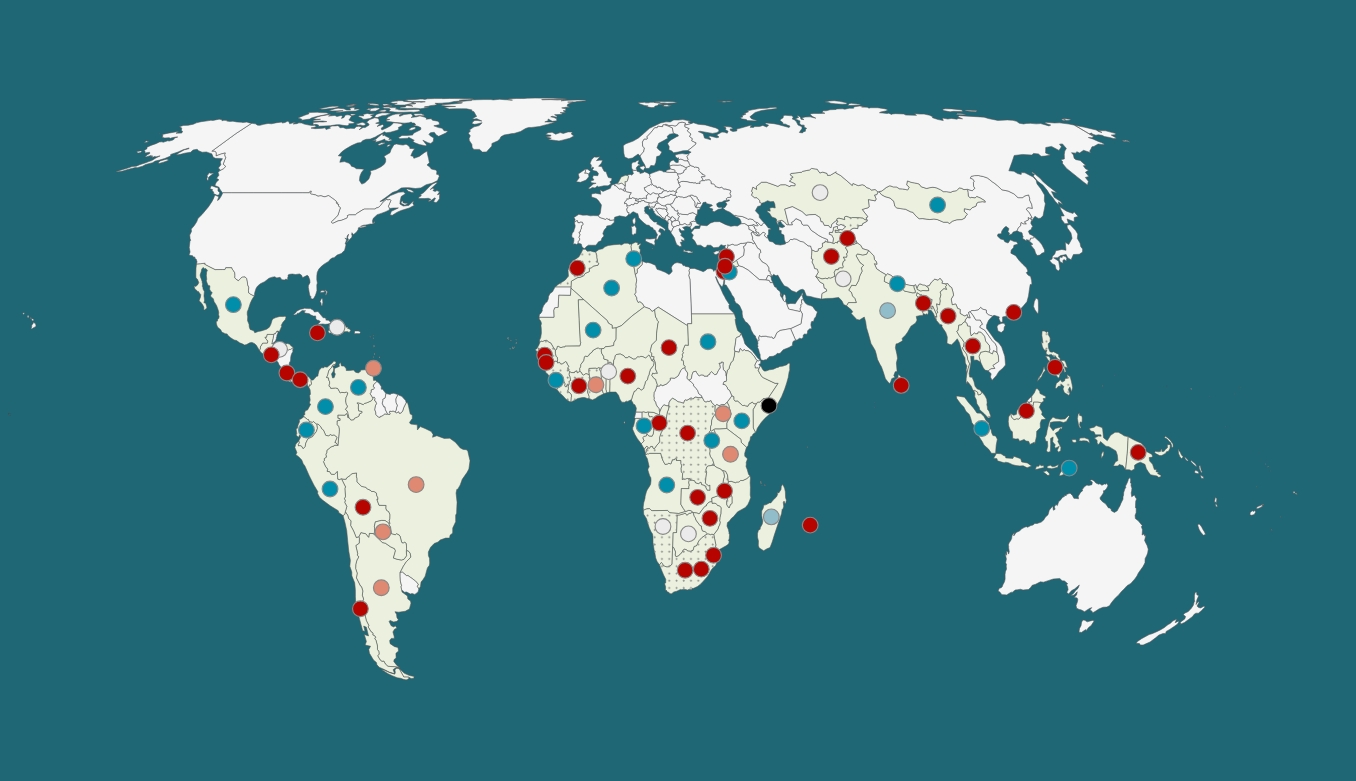
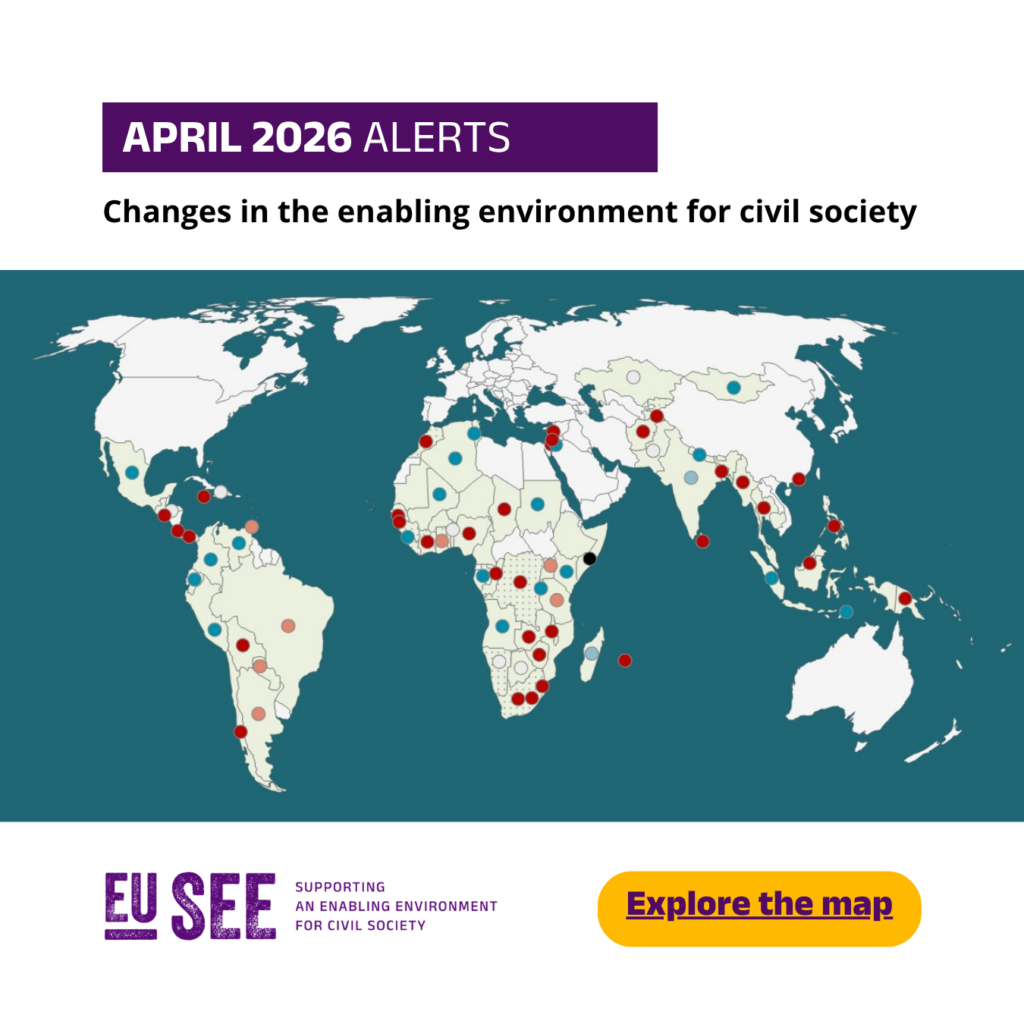
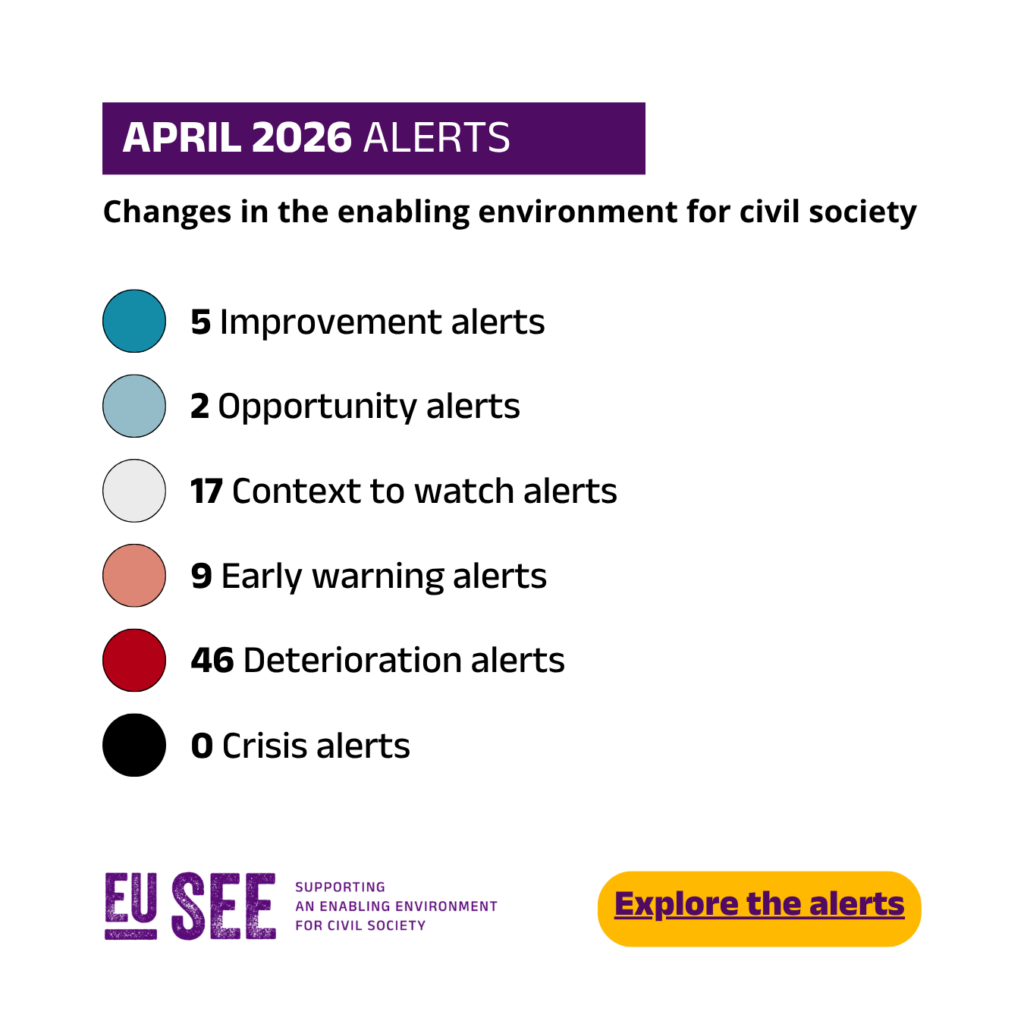
April 2026 continued the EU SEE’s observation of increasing structural pressures on civic space, often characterised by a convergence of regulatory coercion, repression of dissent, institutional backsliding, and growing physical insecurity for civic actors. While some isolated developments, such as judicial openings and participatory consultations, demonstrated resilience, the overall trajectory pointed toward consolidated executive control, shrinking accountability mechanisms, and the normalisation of exclusionary and punitive governance, particularly in moments of political transition, such as elections. This was punctuated by the last minute cancellation of RightsCon in Zambia due to political concerns around civil society activities in the country ahead of the Zambian elections in August.
Emerging Trends
1. Regulatory Measures Deployed to Constrain Civil Society Activities
A dominant theme in April was the weaponisation of regulations to inhibit the operational capacity of civil society organisations.
For example, in the Argentine province of Misiones, Provision No. 137 introduced an exceptional “regularisation” regime for CSOs with historic administrative non‑compliance. While framed as a normalisation opportunity, the measure imposed strict timelines, fines, and discretionary state intervention powers that expose smaller organisations to forced closure and dissolution.
Similar dynamics unfolded in Trinidad and Tobago, where over 3,000 non‑profits were suddenly placed at risk of suspension or deregistration due to compliance confusion around new reporting requirements (Form 6). Late communication, unclear guidance, and administrative bottlenecks revealed how regulatory shifts introduced without structured engagement can destabilise the sector and disrupt operations.
In Malawi, district‑level by‑laws introduced parallel registration and licensing requirements for CSOs, creating fragmented oversight and exposing organisations to suspension at the local level despite a national regulatory framework.
These developments echo trends seen elsewhere in April, where heightened registration demands, parallel regulatory systems at local levels, and financial monitoring frameworks increase uncertainty and operational risks for civil society.
2. Escalating Pressure on Human Rights Organisations and Independent Oversight
April saw a worrying intensification of direct pressure on human rights organisations, particularly those with a legacy of oversight and public accountability.
In Tunisia, authorities ordered the one‑month suspension of the Tunisian Human Rights League (LTDH), one of the country’s oldest and most emblematic human rights organisations. The suspension was widely criticised, but fits into a longer trajectory of mounting pressure on civil society, journalists, judges, and opposition figures since 2021. International concern, including from UN Special Rapporteurs, underlined the seriousness of this development.
In Zimbabwe, the reassignment of the Chair of the Zimbabwe Human Rights Commission following her public criticism of Constitutional Amendment No. 3 further illustrated how oversight bodies are being disciplined when they challenge dominant political narratives.
3. Rollback of Rights‑Based Policies and Normative Frameworks
April was also marked by the explicit reversal of rights‑based policy commitments, particularly in the areas of gender equality, human rights, and inclusion.
In Chile, the disbandment of the Feminist Foreign Policy Team represented a clear normative shift under President José Antonio Kast. While officially attributed to budgetary adjustments, civil society actors framed the decision as a political signal downgrading women’s and LGBTIQA+ rights in international engagement. These developments were compounded by the implementation of “passive pardons” for individuals convicted of crimes against humanity during the dictatorship.
In Costa Rica, the government’s withdrawal from the OAS LGBTI Core Group illustrated how foreign policy repositioning can diminish international commitments to equality and non‑discrimination.
Alignment with regressive positions on gender at multilateral forums underscores a wider normative shift affecting civil society engagement and advocacy.
4. Policy Reforms with Structural Implications for Expression and Inclusion
Beyond civil society regulation, April highlighted how sector‑specific policy reforms can also affect civic space.
Chile’s proposed “mega‑reform” includes a provision allowing the mass use of copyrighted works to train AI systems without consent or compensation. Journalists, authors, and creators warned that this measure threatens the sustainability of independent journalism and cultural production, raising concerns about the erosion of intellectual property rights as a pillar of free expression.
In India, the rolling out of a fully digital census with caste quantification created new opportunities for evidence‑based advocacy, but will require close attention and engagement to ensure that vulnerable groups are not excluded. In Mauritius, electricity consumption restrictions linked to the global energy crisis indirectly affected CSO operations reliant on digital infrastructure, illustrating how economic policy responses can also shape civic capacity.
5. The Broader Pattern: Administrative Control is Replacing Democratic Deliberation
Taken together, April’s alerts demonstrate a broader pattern in which administrative instruments and policy shifts are increasingly used to reshape civic space without meaningful consultation or debate. Whether through provincial directives, regulatory notices, institutional suspensions, or sweeping legislative packages, states are asserting control in ways that weaken representational diversity, and diminish civil society’s role as a democratic intermediary.
April Country Focus Reports and Snapshots
- Argentina Country Focus Report
- Guatemala Informe Enfoque Pais
- Chad Country Focus Report
- Honduras Informe Enfoque Pais
- Mongolia Country Focus Report
- Brazil Country Focus Report
- Kazakhstan Enabling Environment Snapshot
- Trinidad & Tobago Enabling Environment Snapshot
- Nepal Enabling Environment Snapshot
- Malaysia Enabling Environment Snapshot
- Benin Enabling Environment Snapshot
- Venezuela Enabling Environment Snapshot
- Jordan Enabling Environment Snapshot
- Uganda Enabling Environment Snapshot
- Ecuador Enabling Environment Snapshot (Spanish)
- Malawi Enabling Environment Snapshot
- Thailand Enabling Environment Snapshot
- Myanmar Enabling Environment Snapshot
- Mexico Enabling Environment Snapshot (Spanish)
- Bolivia Enabling Environment Snapshot (Spanish)
- Kenya Enabling Environment Snapshot
- Bénin Aperçu de l’environnement favorable
- Liberia Enabling Environment Snapshot
- Colombia Panorama del Ambiente Habilitante (English)
- Namibia Enabling Environment Snapshot
- Chile Enabling Environment Snapshot
- Burundi Enabling Environment Snapshot
- Zambia Enabling Environment Snapshot