
By Clarisse Sih and Bibbi Abruzzini, Forus, EU SEE consortium partners
Across regions and political systems, civil society faces both longstanding and emerging forms of repression during periods of constitutional and political reform as well as electoral activity, ranging from legal and administrative restrictions on association and assembly to newer forms such as digital surveillance, online harassment, and disinformation campaigns.
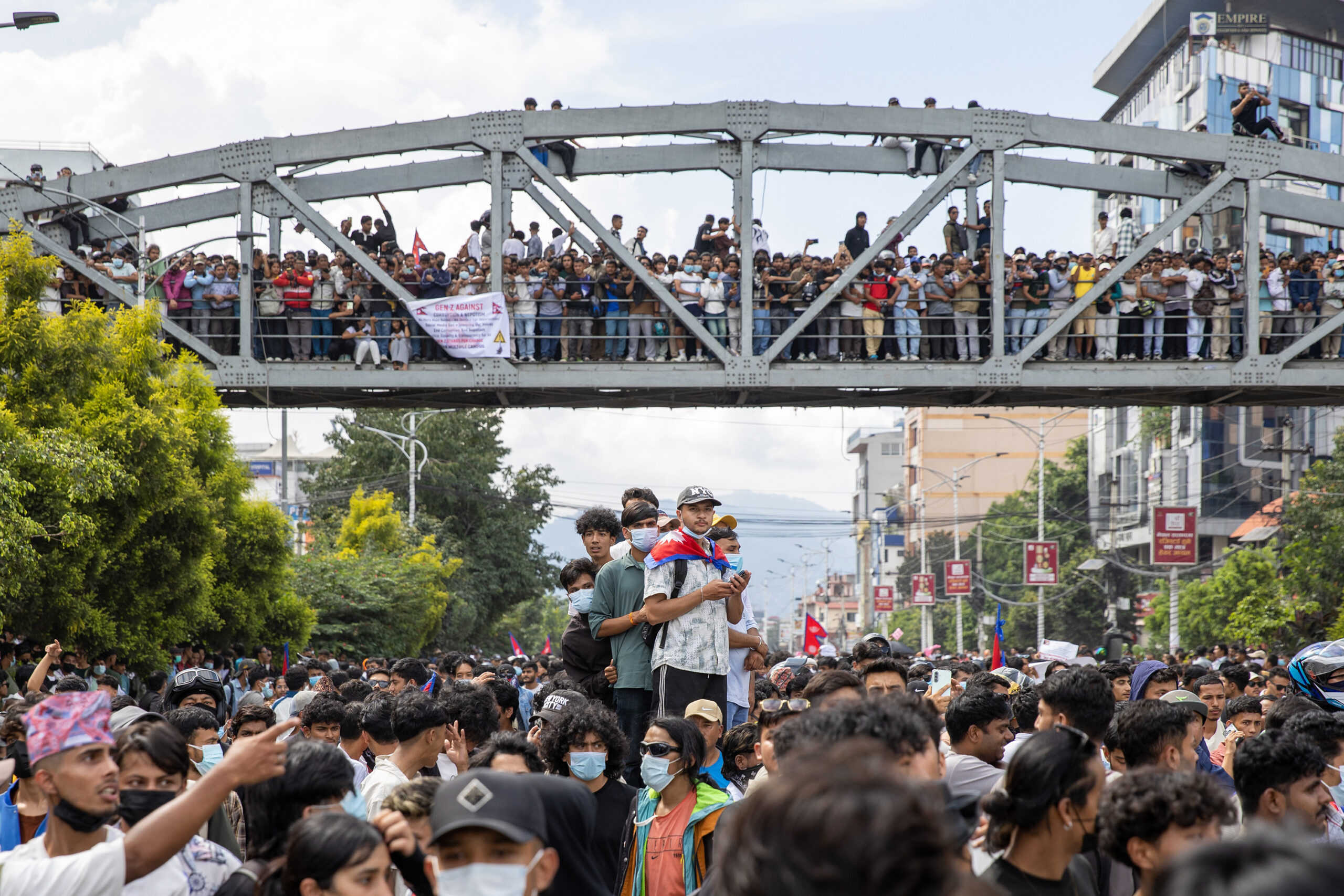
Through its Early Warning Mechanism alerts and reports, the EU SEE has observed growing trends in this area, with internet shutdowns and other structured repressive activities often amplified around these crucial moments of political transition, to control dissent and information flows.
In this article, we explore the data presented to EU SEE by our network across 86 countries to make these emerging trends salient. These restrictions take three broad forms: direct harassment, surveillance and violence against civil society actors; digital interference including internet and social media shutdowns; and administrative and bureaucratic interventions that exclude civic voices from institutional processes. Together, they reveal a pattern in which political transitions — far from opening space for participation — are increasingly used as opportunities to consolidate control.
Direct harassment, surveillance and violence
Over in Zimbabwe, the environment surrounding constitutional reform debates has been marked by arrests, abductions and increased surveillance of critics. The reforms under discussion would significantly reshape the country’s political system, including proposals to extend presidential and parliamentary terms from five to seven years and shift the election of the president from a direct popular vote to a parliamentary process. These changes could alter how executive power is determined, raising concerns about democratic accountability. At the same time, journalists, opposition figures and civil society actors who attempt to scrutinise or debate these proposals have faced intimidation and arrests in times in which open public discussion and independent reporting are essential.
“Our experience in Zimbabwe shows that politically sensitive moments such as elections and constitutional reforms often coincide with heightened restrictions on civic space. Ensuring that civil society, media, and citizens can operate freely during these periods is essential to safeguarding transparency, public trust, and democratic integrity,” says the EU SEE National Member in Zimbabwe.
In Colombia, the targeted killings of community leaders, particularly those involved in environmental protection, highlight a significant gap between the formal guarantees established by the state and the actual security conditions on the ground, demonstrating how violence continues to undermine citizen participation and local governance.
“This phenomenon is critical in contexts where political and territorial interests intersect, as these leaders play a central role in social mobilisation, mediation with the authorities and support for electoral participation. However, their physical elimination not only victimises the individual but also establishes patterns of silencing that weaken collective action and intimidate the electorate in the long term, reducing or conditioning voter turnout and dismantling the fabric of social control. In many regions, persistent insecurity deters potential candidates from standing for election, undermines independent electoral oversight and allows armed groups or entrenched elites to consolidate their control over political and economic resources, restricting civic space and hindering democratic consolidation,” says Foro, EU SEE network member for Colombia.
In Sierra Leone, a ruling in favour of a journalist wrongfully dismissed for sharing content critical of political leadership highlights the role independent institutions can play in safeguarding media freedom – even as broader challenges persist. Protections are particularly important ahead of electoral periods, as they help ensure that journalists and civil society can monitor campaigns, hold authorities accountable, and support informed citizen participation.
In a more recent development in Sierra Leone, the Speaker of Parliament suspended a private member’s motion that sought to establish a parliamentary committee to investigate National Elections Watch (NEW), a civil society organisation focused on electoral monitoring. The motion, tabled in March 2026, called for scrutiny of NEW’s funding and financial management — framed by its proponents as a transparency measure, but widely understood as an attempt to intimidate and delegitimize an independent watchdog ahead of future electoral periods. Notably, this was not the first such attempt; the Deputy Speaker had made a similar call in February 2026. While the Speaker’s decision to suspend the motion provided temporary relief, the episode illustrates a troubling pattern in which politicians seek to use parliamentary mechanisms to censor and weaken civil society organisations that hold them accountable — pointing to the deep vulnerability of civic space in Sierra Leone even where formal institutional protections nominally exist.
In the Republic of Congo, civil society organisations have faced direct restrictions in the lead-up to key political moments. The Congolese Human Rights Observatory was barred from holding a press conference to launch its annual report on the human rights situation in the country. Authorities justified the ban on grounds of “public order”, illustrating how administrative measures can be used to limit scrutiny and public debate to “sanitise” people’s perception of politically sensitive topics. As the country approached the March 2026 electoral cycle and other political transitions, civil society organisations warned that this climate of increasing intolerance toward dissenting voices risks undermining transparency and accountability at a time when open debate and civic engagement are critical to democratic governance.
Digital interference
In addition to regulatory pressures on civil society and the media, authorities may also resort to digital restrictions. In India, election-related tensions in Meghalaya led authorities to impose a curfew and suspend access to the internet. While framed as a response to violence, such measures also restrict access to information and limit the ability of civil society and media to monitor events and engage in public discourse.
Digital restrictions are also evident in Gabon, where judicial decisions have effectively upheld social media shutdowns. Following a suspension of social media lasting approximately two months, Gabonese authorities opted for an extraordinary measure: rather than submitting legislation to Parliament, the President issued an executive order on the regulation of digital platforms, published in the Official Journal on 8 April 2026 and given immediate legal force. Under Article 4 of the Order, all social media users are required to identify themselves by providing personal data, while businesses must supply their commercial register number and share capital — measures that raise serious concerns about anonymity, privacy, and the chilling effect on free expression. The text contains significant legal ambiguities, leaving concepts such as “public order” and “national security” to the discretion of the High Authority for Communication, and introducing a principle of collective liability whereby platform administrators can be punished for content posted by users. While the order formally ends a period of digital deadlock that had severely disrupted communication, access to information, and digital economic activity, the decision to bypass parliamentary scrutiny raises fundamental questions about institutional checks and balances. In practice, Gabon’s approach illustrates a broader trend visible across the region: authorities increasingly use legal and regulatory instruments — not just outright shutdowns — to institutionalise control over digital spaces, embedding restrictions on free expression into the architecture of governance itself.
2025 was a record breaking, devastating year for internet and social media shutdowns globally. The #KeepItOn coalition documented at least 313 shutdowns across 52 countries— surpassing the previous 2024 record of 304 shutdowns in 55 countries. Another year confirming the dramatic rise of shutdowns as a means and method of warfare to silence dissent, terrorize communities, conceal abuses and collectively punish entire populations.
“In 2025, not a single day passed without government-mandated internet blackouts silencing entire populations, denying millions of people the right to communicate with loved ones, access to education, life-saving information, democratic participation, as well as hampering humanitarian operations. Internet shutdowns are not harmless — they are tools of repression and violence, causing preventable deaths and systematic suffering. But people power and resistance is rising — online and off, demanding accountability, their rights be respected, and their voices heard,” says Felicia Anthonio, #KeepItOn Global Campaign Manager at Access Now.
Administrative and bureaucratic restrictions
In Paraguay, concerns over the integrity of upcoming elections have intensified following the rollout of controversial electronic voting machines. Civil society and political actors have raised serious concerns about transparency, auditability and the lack of meaningful consultation – factors that risk undermining public confidence in electoral processes.
These developments come amid an increasingly restrictive environment for civil society. In December 2025, organisations filed an action of unconstitutionality against the so-called “anti-NGO law”, which expands state control over the formation, operation and financing of CSOs and introduces disproportionate sanctions. At a time when independent civic oversight is essential to ensure electoral integrity, such restrictions erode democracy’s “core mechanism” that civil society exists to protect.
Restrictions during politically sensitive reform processes are not limited to the targeting of activists and critics. They can also affect the media’s ability to operate freely. In Panama, proposed legal reforms affecting media regulation have sparked alarm among journalists, particularly due to the lack of consultation and potential impact on editorial independence.
A further illustration of this pattern in Panama came in April 2026, when the National Assembly elected Ángela Russo as the new Ombudsman in a process that civil society organisations widely condemned as exclusionary and politically orchestrated. Despite Law 504 of 2025 explicitly requiring the Government Commission to promote civil society participation in the selection process, the election proceeded with minimal transparency: ten citizen objections were submitted, two of them directly against Russo, yet neither their content nor the reasons for their dismissal were made public. Three statements issued by human rights organisations were neither acknowledged nor incorporated into parliamentary debate. The process was further overshadowed by the ruling party openly directing its caucus to back Russo’s candidacy — undermining any appearance of institutional independence. Civil society actors also raised concerns about Russo’s judicial record, particularly her role in a ruling that international legal experts warned had hindered accountability over public funds. The episode is a stark reminder that the erosion of civic space during politically sensitive moments is not always achieved through overt repression; it can equally take the form of institutional processes designed to exclude dissenting voices while maintaining a veneer of democratic legitimacy.
Conclusion and recommendations
Taken together, these cases illustrate how elections and political transitions are repeatedly becoming moments of heightened restriction rather than participation being guaranteed to all.
As countries continue to navigate complex political transitions, the protection of the enabling environment for civil society and ensuring that citizens, journalists and civil society organisations can operate freely remains essential as it ensures transparency, accountability, and citizen participation, all of which are essential for healthy, legitimate political transitions and democratic processes.
Here’s points of attention from across the EU SEE network with recommendations on how to protect the enabling environment during constitutional and political reforms as well as electoral periods.