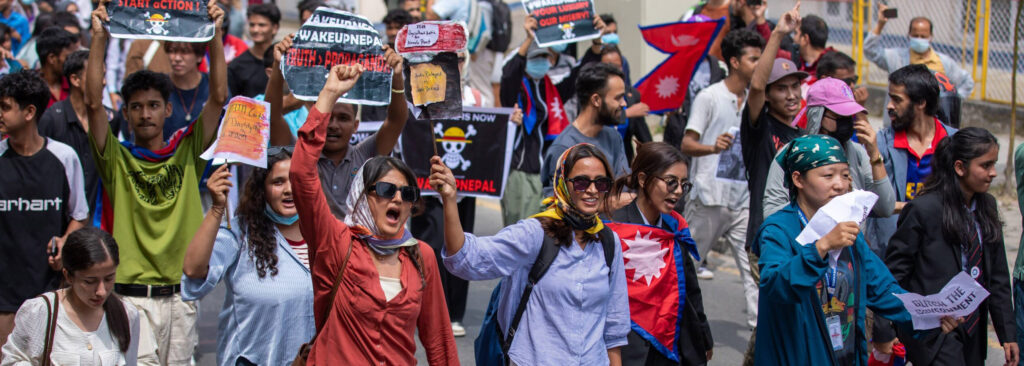
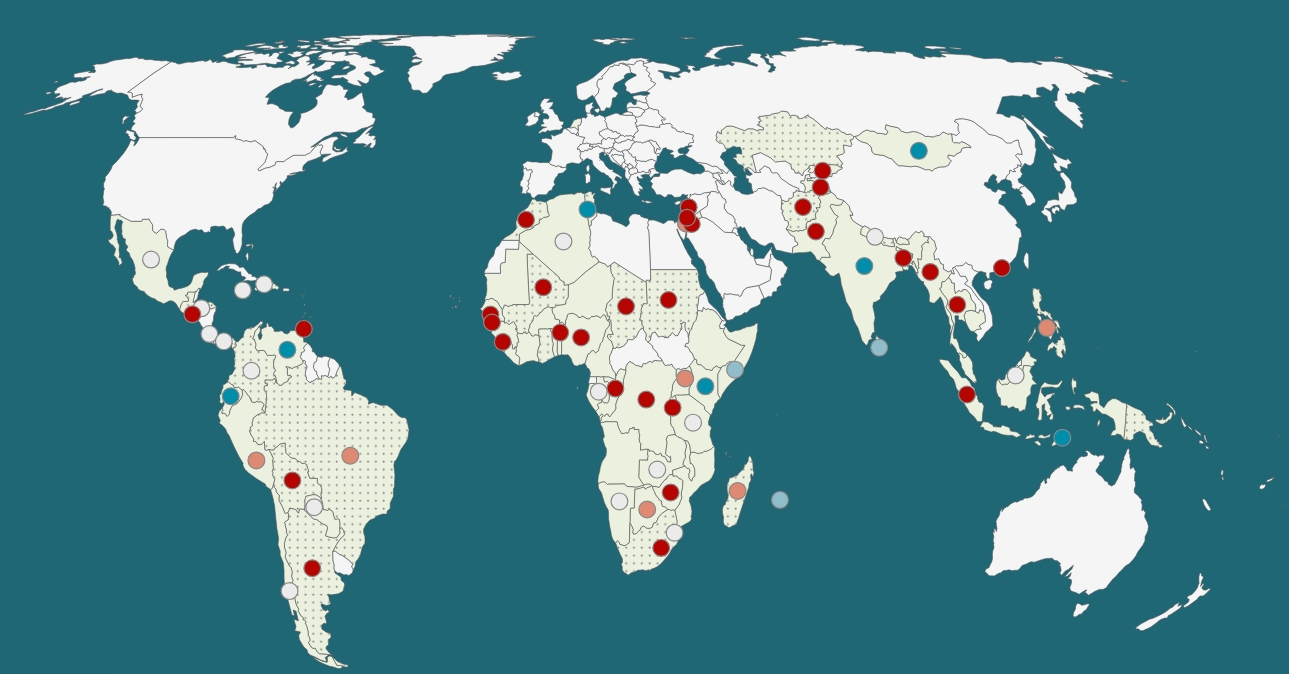
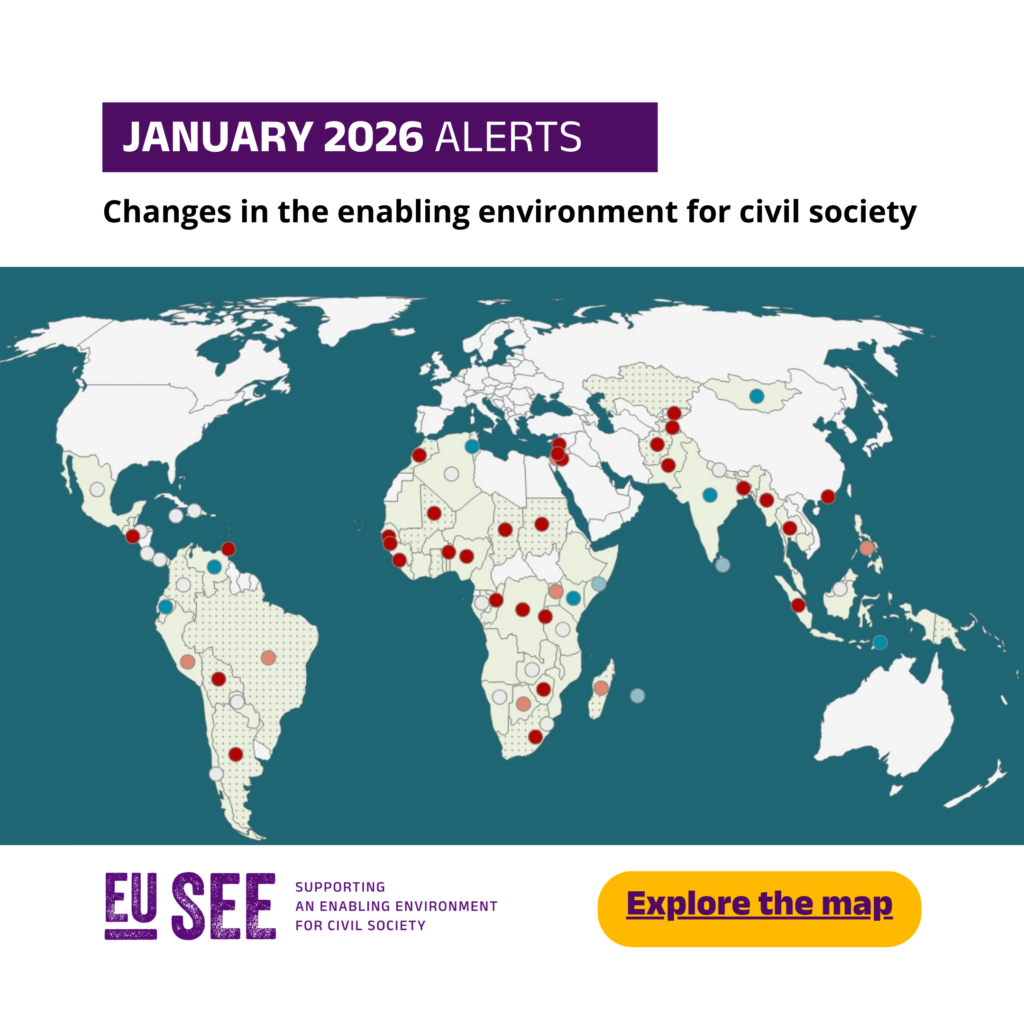
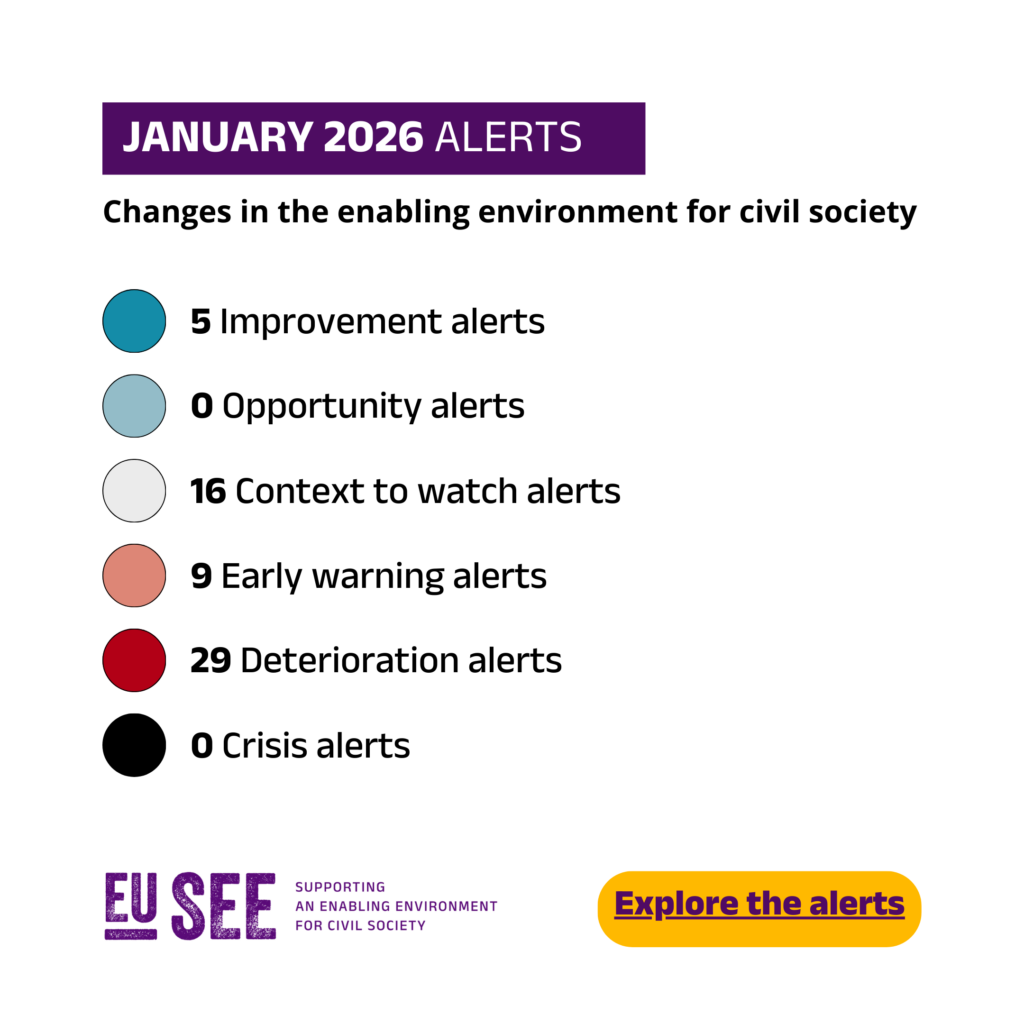
The start of the year has been marked by heightened political volatility, regional insecurity, and a sharp contraction of civic and democratic space across regions. Positive developments such as the court‑ordered releases of detained activists in Tunisia and funding protections for cultural institutions in India were overshadowed by intensified reprisals against civil society, renewed attacks on civic space in cultural spaces, and evolving legal restrictions.
Emerging Trends
Selective De-escalation: Releases without Full Freedom
January saw several high-profile releases of journalists, activists, and political detainees particularly in Tunisia and Venezuela.
In Tunisia, after nearly 20 months of pre-trial detention, NGO workers including Chérifa Riahi were released after sentences were converted to fines or suspended sentences. Similarly, journalist Chadha Hadj Mbarek was freed following a sentence reduction. Yet Tunisia continues to prosecute opposition leaders and activists throughout December and January, maintaining pressure on civil society and human rights defenders.
In Venezuela, the government announced the release of political detainees following the U.S. capture of Nicolás Maduro. However, many remain under precautionary measures, with some prohibited from speaking publicly, and subject to ongoing judicial processes.
Freedom of Expression and Academic Space Under Renewed Pressure
Government crackdowns on speech, online, academic, artistic, and journalistic, have intensified across Asia and Africa.
In Bangladesh, two university professors had their contracts terminated after a private Facebook post triggered protests, catalysing a campus shutdown, and the resignation of the Vice Chancellor. The incident signals a dangerous precedent for academic freedom, where allegations tied to religious sensitivities lead to punitive action without due process.
In Sierra Leone, environmental activist Trevor Young was arrested under cybercrime laws after sharing a video of an encounter with police. While he was subsequently released, the event is symbolic of the casual weaponisation of digital legislation to silence criticism.
“Describing your experience can be considered a cybercrime. Sharing your story can be labeled cyberbullying. Holding a public institution accountable can be labeled cyberstalking,” Young said.
In Pakistan, qawwal Faraz Amjad Khan faced criminal charges for performing a song with perceived political overtones at a government-sponsored event. Authorities asserted the song stirred excitement and agitation among attendees. A Lahore court subsequently granted him interim/pre-arrest bail on 5 January 2026 while investigations continue. This event is emblematic of a broader pattern of shrinking cultural and artistic space.
Meanwhile, in Hong Kong, authorities deepened their enforcement of national security law. Courts convicted pro-democracy Apple Daily media founder Jimmy Lai of collusion and sedition after a two-year trial. Mr Lai faces life imprisonment, with the verdict due in early 2026. Lai had pleaded not guilty, testifying he “never” used foreign contacts to influence policy and had only “relayed what happened in Hong Kong” when asked.
CCP censors also banned filmmaker Kiwi Chow’s new movie ‘Deadline’, citing national security concerns. The CCP regime is clearly ramping up its efforts to purge Hong Kong’s long established and globally heralded cultural sector of any potential dissenting voices by abusing national security laws.
Legal and Administrative Tools as Instruments of Control
Several governments used January to strengthen punitive legal frameworks, expand administrative oversight, and further develop their opaque bureaucratic power to strengthen their grip on civic space.
In Algeria, Parliament adopted amendments to the Nationality Code introducing Article 22 bis, broadening grounds for the Government to revoke citizenship, even for acts committed abroad. Lawyers and organisations warn about the broad and vague nature of several formulations and the risk of extensive use against critical voices, particularly in the diaspora.
Despite claiming this law would be applied selectively and under stringent criteria, authorities still refuse justify bans on re-entry for figures such as Nassera Dutour.
In Uganda, days before national elections, authorities suspended operating permits of key human rights NGOs. They also amplified fears of digital repression by suspending Starlink services, evoking memories of past nationwide shutdowns.
In Malaysia, the Home Ministry circulated a survey conflating peaceful assembly with riots, reviving concerns that legislative reforms could further criminalise protest, including by introducing the novel concept of “online riots,” defined as large-scale disorderly behaviour online. Several questions also conflated peaceful assemblies with riots: seeking input on whether assemblies that “lead to” riots comply with human rights standards.
Similarly, in Zimbabwe, new clearance requirements placed local chiefs as gatekeepers over community activities and gatherings, embedding surveillance and permission structures at the grassroots level.
These developments underscore a growing trend in which governments deploy regulation, administrative discretion, and legal reforms, as well as or in support of brute force, as tools to shrink civic space while maintaining a veneer of procedural legitimacy.
January Country Focus Reports and Snapshots
India Enabling Environment Snapshot
Ecuador Enabling Environment Snapshot (Spanish here)
Israel Enabling Environment Baseline Snapshot
Lebanon Country Focus Report
Republic of Congo Country Focus Report (French here)
Burundi Country Focus Report
Venezuela Country Focus Report (Spanish here)
Tajikistan Country Focus Report