
By Clarisse Sih and Bibbi Abruzzini, Forus, EU SEE consortium partners
Universities have long been regarded as spaces for independent knowledge production, critical thinking and democratic debates. There are institutions where students, academic and civil society actors test ideas, generate evidence and engage in discussions that shape public policy and social change. Yet across different regions, universities have become contested political spaces. Political narratives, ideological pressures, funding decisions and regulatory changes are reshaping the role universities play in civic life.
Recent developments from diverse contexts suggest a broader global trend: the growing instrumentalisation or restriction of higher education institutions and the implications this has for student activism, academic freedom, civic participation and the broader enabling environment for civil society.
Universities as pillars of the civic ecosystem
Universities are more than educational institutions. They serve as crucial infrastructure for the civic ecosystem. Academic research often provides the evidence base used by civil society organisations (CSOs) to advocate for policy reforms, human rights protection and environmental or social justice initiatives. Universities also offer relatively protected environments where dissenting ideas can be debated and refined.
Students frequently represent the next generation of journalists, lawyers, activists and researchers among other professions. As such, universities play an important role in shaping civic engagement and democratic participation. Student unions, academic associations and research networks are often closely connected to civil society movements.
When the independence of universities is compromised, the consequences extend beyond academic life. The range of voices that can participate in public debates gets narrower, critical research may be discouraged and the enabling environment in which CSOs operate may gradually shrink.
Shaping narratives and influencing youth
One dimension of the growing pressure on universities involves attempts to shape political narratives within academic spaces.
In Pakistan, several media sources say a series of visits by senior military communication officials to universities starting in mid-2025 have sparked debate about the role of state institutions in academic environments. For example, in January 2026, the Director General of Inter-Services Public Relations held an interactive session with students at Karachi University as part of a broader outreach initiative targeting universities across the country. According to participants, these engagements are framed as “national – awareness sessions” but have raised concerns among observers that they could influence how young people interpret political developments and state institutions.
Universities in Pakistan have historically served as spaces for political discussion and civic engagement. Critics argue that when institutional outreach promotes a single narrative about national politics, it may reduce students’ exposure to diverse perspectives and contribute to a more constrained environment for political debate. Supporters, meanwhile, describe such engagement as legitimate efforts to inform young citizens about security and national issues. Regardless of interpretation, the debate highlights the delicate balance between state communication and academic independence.
Ideological influence over curricula
Another pathway through which political influence can affect universities and education systems is through changes to curricula and teaching frameworks.
In Paraguay, the Ministry of Education and Science issued a resolution in November 2025 mandating the removal of the word “gender” from all educational materials. The decision extends earlier restrictions on gender theory in schools and has been criticized by social organisations and teachers’ unions as a step backwards for human rights education.
Critics argue that limiting discussions to binary notions of equality between men and women prevents broader analysis of structural inequalities and gender stereotypes. The policy has also been linked to growing anti-rights narratives that portray gender discussions as foreign ideological impositions. When certain topics are removed from academic or educational debate, research and public dialogue on those issues may diminish, potentially affecting advocacy efforts related to gender equality and human rights.
Funding pressures and knowledge production
Financial decisions affecting universities can also influence the broader civic ecosystem.
In Argentina, reductions in research funding have generated concern among academics and CSOs that rely on university research to support evidence-based advocacy. When funding cuts affect research institutions, the ability to conduct independent research – particularly on politically sensitive topics – may be weakened.
CSOs frequently rely on academic partnerships to provide data, policy analysis and technical expertise. If these research ecosystems weaken, advocacy efforts may struggle to maintain the empirical evidence needed to influence policy debates.
A comparable dynamic can be observed in Bolivia, where pressures on both civil society and academic institutions intersect with broader constraints on the enabling environment. Alongside documented violations of freedom of expression and increasing hostility toward journalists during the 2025 electoral period, civil society organisations face structural barriers to operation, including complex registration processes and declining, unpredictable funding. Notably, the suspension of state funding for university-based research on fuel quality highlights how financial decisions can directly affect academic independence and limit the production of evidence critical for public debate. Such conditions not only weaken the capacity of civil society to conduct research and advocacy but may also encourage self-censorship, as organisations and academic institutions navigate political and economic uncertainty.
Restrictions on academic freedom and expression
Several recent developments illustrate how pressures within universities can directly affect academic freedom and freedom of expression.
In Bangladesh, two professors from the University of Asia Pacific were dismissed following student protests linked to a Facebook post discussing a widely publicised criminal case. The university stated that the terminations were taken in response to campus tensions. However, academic networks have warned that the decision may set a concerning precedent, suggesting that ideological or religious sensitivities could lead to punitive measures against educators.
Similarly, in Zimbabwe, multiple students across several universities were suspended after participating in demonstrations or expressing criticism of university leadership. These suspensions, including cases involving members of the Zimbabwe National Students Union, have raised concerns about restrictions on student activism and freedom of expression on campus.
In Hong Kong, the case of student Miles Kwan provides a chilling example of the consequences of authoritarian political control of universities. Mr. Kwan was arrested for “seditious intent” after organising a petition to seek accountability and an independent investigation into the Wang Fuk Court fire that claimed 168 lives. He was also expelled by his university.
“We are profoundly disappointed that the Chinese University of Hong Kong not only failed to defend Mr. Kwan’s fundamental right to freedom of expression, but actively compounded his ordeal through expulsion. Furthermore, this follows another university’s recent decision to suppress student efforts to peacefully commemorate the victims of the fire, directly capitulating to warnings from Beijing’s national security apparatus against ‘using the disaster to cause chaos in Hong Kong.’ We strongly condemn this ongoing trend of Hong Kong universities succumbing to political pressure rather than safeguarding their campuses as safe havens for free expression.” – EU SEE Hong Kong Network Member
Such measures may create a chilling effect, discouraging students and academics from speaking openly or participating in civic debates.
A similar dynamic has been observed in Venezuela, where academic and journalistic work has led to detention by security authorities. In October 2025, four students conducting fieldwork for a thesis project were arrested near the Tocorón Penitentiary Centre after photographing the facility’s exterior. Security personnel confiscated their equipment and identification before transferring them to the Bolivarian Intelligence Service (SEBIN), and their whereabouts remained unknown for several days until their release on 3 November. Around the same period, a crime reporter was also detained after being approached by unidentified individuals near his home in Caracas. These incidents highlight the risks that students and journalists may face when carrying out research or documentation activities. When academic inquiry and information gathering become grounds for detention, the boundaries between research, journalism, and political expression blur, creating a climate in which scholars and students may hesitate to investigate sensitive issues.
Shrinking space for student organisations
Student organisations and unions have historically played an important role in civic engagement and political participation. However, they too are increasingly facing restrictions.
In Hong Kong, six college student unions at the Chinese University of Hong Kong ceased operations between December 2025 and January 2026 after the university required them to register with the police under the Societies Ordinance in order to receive official recognition. Student leaders argued that the requirement created legal and operational risks that made it impossible for unions to continue functioning independently.
“We deplore the systematic crackdown on student organisations, which has already led to the dissolution of the Hong Kong Federation of Students and the majority of university student unions. Article 22 of the International Covenant on Civil and Political Rights (ICCPR) explicitly guarantees freedom of association, encompassing the right of organisations to determine their own purposes, activities, and modes of operation free from unnecessary or discriminatory restrictions. The use of legal threats, administrative interference, resource deprivation, and the harassment of members by authorities, university management, and unidentified actors to force these groups into operational paralysis constitutes a severe violation of the freedom of association.” – EU SEE Hong Kong Network Member
The closures follow earlier developments in which the university severed ties with the main student union in 2021. Together, these changes have significantly reduced organised student representation within the university.
When student organisations disappear, an important channel for civic participation and political engagement among young people may also diminish.
Legal and regulatory restrictions
In some contexts, governments have introduced legal or regulatory changes that restrict the scope of discussion within academic institutions.
In Myanmar, amendments to the Private Health service Law enacted by the military junta in February 2026 prohibit the teaching of politics, religion or subjects deemed incompatible with “Myanmar culture” in private medical training schools. The new rules also introduce strict licensing requirements for medical training institutions.
Observers note that the changes may directly affect the underground medical training networks established by healthcare professionals linked to the Civil Disobedience Movement following the 2021 military coup.
Elsewhere, restrictions have emerged through efforts to limit civil society engagement in educational environments. In Israel the Ministry of Education has moved to prevent organisations that promote refusal of military service from entering school for civic education activities. Critics argue that such measures restrict dialogue between civil society groups and students.
In Algeria, the arrest and pretrial detention of academic Tahar Ouhachi in February 2026 has raised significant concerns about the protection of academic freedom. Ouhachi, a lecturer and researcher, was detained by security services and remanded in custody on charges reportedly related to his public commentary and research activities. Authorities have invoked accusations such as “disturbing public order,” “spreading false information,” or publications deemed harmful to national interests—charges that are increasingly used against critics and independent voices. Observers within civil society and academia argue that the case reflects a broader tightening of control over academic expression and socio-political analysis. The detention of researchers for their work contributes to a climate of fear and self-censorship within universities, reinforcing concerns that academic spaces are becoming increasingly constrained as arenas for critical inquiry and public debate.
Repression of education-related civil society
In Gabon, the arrest of prominent education sector activists following a national teachers’ strike illustrates another dimension of pressure affecting education-related enabling environment. The arrests of Marcel Libama and Simon Ndong Edzo in January 2026 sparked strong reactions from trade unions and human rights defenders, who viewed the detentions as attempts to silence dissent linked to education sector mobilisation.
Although the two leaders were later released pending trial, the episode highlights how disputes involving education policy and labour rights can intersect with broader restrictions on the enabling environment.
The ripple effects on civil society
Taken together, these developments highlight how pressures on universities can ripple outward across the broader civil society ecosystem.
Universities generate much of the research that informs public debate and policy advocacy. When research on sensitive issues – such as corruption, environmental harm or human rights abuses – is discouraged or restricted, advocacy efforts may be weakened because claims can be dismissed as opinions rather than evidence-based arguments.
Universities also provide spaces where controversial or innovative ideas can be debated before entering the public sphere. If these spaces narrow, individuals may increasingly self-censor or struggle to find platforms where their views can be expressed.
This can gradually reshape the enabling environment for civil society. A narrower range of perspectives in academic and public debate may make it politically easier to introduce legislation restriction civil society actors or delegitimising their work.
Over time, the effects may also influence youth engagement. Students who perceive universities as politically constrained environments may be less likely to participate in civic organisations or activism.
Protecting the role of universities
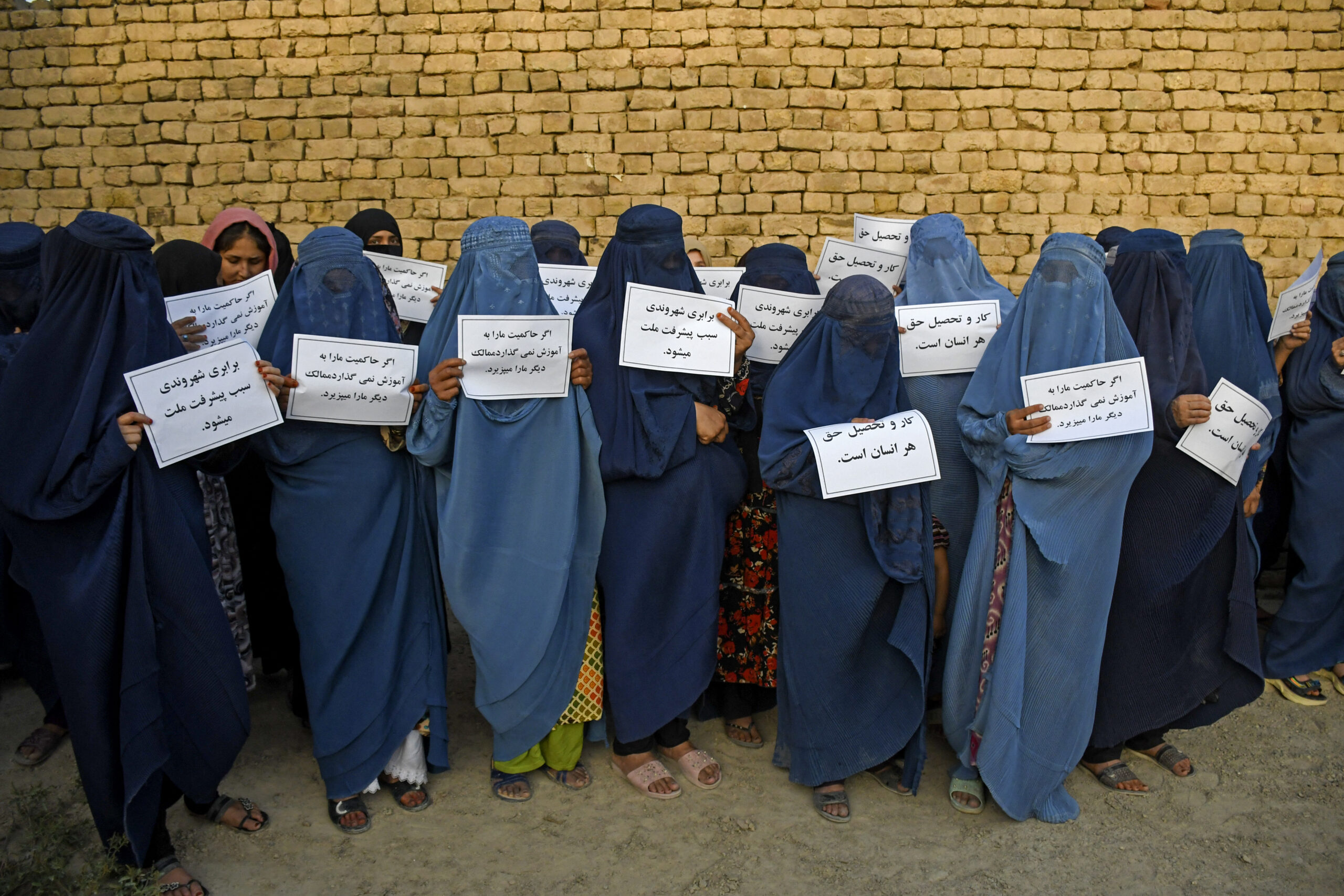
One only needs to look to the tragic events unfolding in Afghanistan, where a repressive regime of gender apartheid is played out across the educational sector, to understand the importance of protecting the university sector as a haven of free and inclusive expression. Women and girls are subject to multiple layers of restrictions. The Taliban has banned them from schools above grade six, from universities and all forms of training, including medical training. 2.2m girls remain banned from school. Over the past year dozens schoolteachers, university students and religious scholars were detained for peacefully expressing their opinions. These changes have severely restricted women’s rights to work, learn, grow, and live an independent life. The absence of female participation in civil society and daily life is a grievous injustice and significant hindrance to the enabling environment.
Universities play a foundational role of democratic societies. They nurture critical thinking, support evidence-based policymaking and help cultivate future civic leaders. Protecting the independence of academic institutions is therefore closely linked to protecting the broader space in which civil society operates.
While the examples highlighted here arise from very different political contexts, they collectively illustrate a growing tension between political power and academic autonomy. As universities continue to evolve within complex political environments, maintaining their role as spaces for open inquiry and debate will remain essential for sustaining vibrant and pluralistic civic life.