
Nepal, a landlocked South Asian nation, transitioned to a federal democratic republic in 2008 after abolishing the 239-year-old monarchy. This change followed the 2006 People’s Movement (Jana Andolan II), which ended the Maoist insurgency (1996–2006) and led to the Constituent Assembly promulgating the 2015 Constitution of Nepal. The Constitution established a federal system with seven provinces and empowered local governments, guaranteeing multiparty democracy, sovereignty vested in the people, secularism, and fundamental freedoms, including expression. There are legal provisions to mainstream social and gender inclusion through policies such as the Gender Equality and Social Inclusion Policy 2021 and the Election Commission’s Gender and Inclusion Policy, 2021 which promotes inclusion of marginalised communities (Dalits, Madhesis, Adibasi Janajatis) and legally mandates at least 33% women’s participation in various governance mechanisms.
Despite these advances, Nepal has faced political instability, with 14 governments since 2008 and none completing a full five-year term. Fragile coalitions, corruption scandals, delayed service delivery, persistent accountability gaps, and limited employment-generating investments have fuelled public frustration, alongside high youth unemployment, mass emigration, and aid dependency.
Nepal is scheduled to graduate from Least Developed Country (LDC) status on 24 November 2026, reflecting progress in human assets and economic vulnerability, though sustainable growth remains challenged. From a civil society perspective, Nepal’s civic space is rated “obstructed” by the CIVICUS Monitor, marked by restrictions on association, assembly, and expression, and the enabling environment is marred by bureaucratic obstacles and resource constraints for civil society organisations (CSOs). The 2025 crisis has deepened public distrust, disrupted CSO operations, and reinforced the urgent need for inclusive governance to amplify marginalised voices and support Sustainable Development Goals (SDGs).
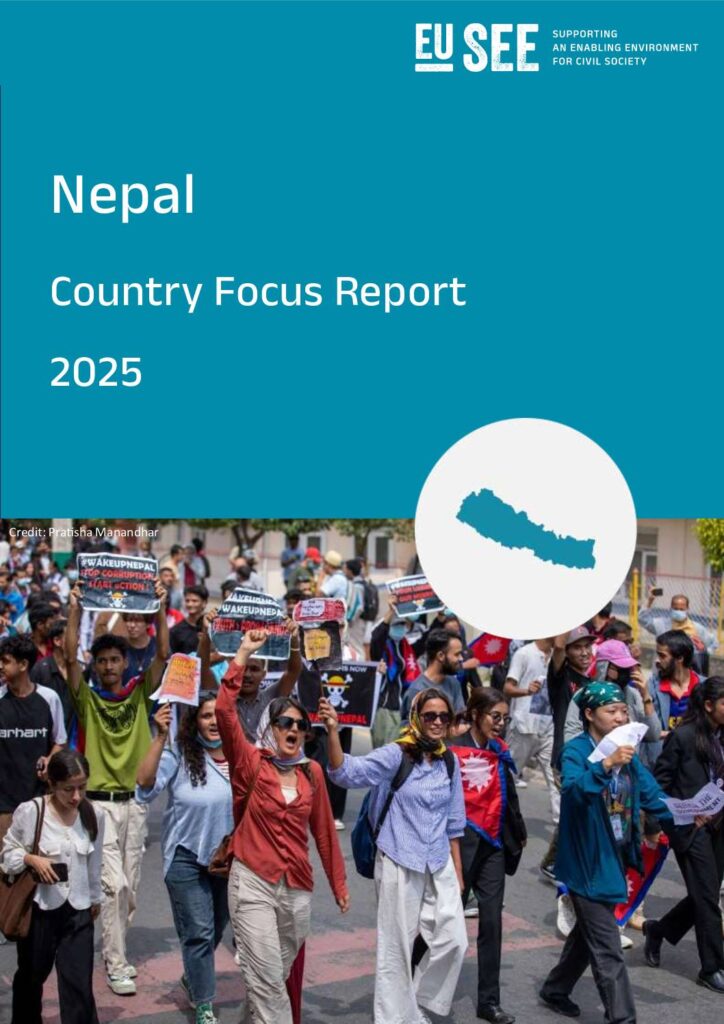
The aftermath of the Gen Z protests led to the collapse of the existing government and the formation of a new interim government under the leadership of a former Chief Justice, with a mandate to conduct elections. The polls will test generational divides, and successful elections would restore constitutional order and respond to the public demand for clean, effective governance. This report covers the period October 2024-2025.
Enabling principles scores