
By Evelyn Mantoiu, European Partnership for Democracy, Bibbi Abruzzini and Clarisse Sih, Forus – EU SEE Consortium partners
A new “youthquake” emerged worldwide in 2025: Gen Z took to the streets in a series of youth-led protests organised via TikTok, Instagram, and Discord. The demands of these movements deeply resonated with each other: governments’ corruption, inability to deliver public services, and lack of accountability, as well as deepening income inequality. In many countries, the majority of protesters were young people, and large numbers lost their lives or suffered injuries, leaving entire generations deeply affected by the unrest.
This pattern, already evident in Bangladesh and Kenya in 2024, gained new momentum in 2025 as youth across Indonesia, Mali, Mexico, Nepal, Serbia, and elsewhere took to the streets and online spaces. The gains were tangible in some cases—such as policy reversals or government resignations—but they came at a human and psychological cost.
“Gen Z is a political force. Their demands resonate with many, moving beyond borders united by the same messages against corruption and lack of government accountability. These protests have come at great personal costs for many young people, and governments that have violently repressed these movements should not be left unaccountable,” says Evelyn Mantoiu, Research and Data Manager at the European Partnership for Democracy (EPD) where she focuses on researching democracy support.
From Latin America to South Asia and across Africa, through data collection and peer-learning dialogues on the present and future(s) of protests, the EU SEE network is collaborating with its members and young activists to understand how new movements evolve, intersect and demand accountability in restricted environments for civil society.
Increasingly, youth-led movements are intertwined with digital spaces, as online platforms and networks amplify youth voices and mobilise communities at unprecedented speed. Recognising this, civil society networks such as Forus are investing in youth leadership—especially around digital rights—acknowledging that youth engagement today is inseparable from online organising and “information ecosystems”.
As these shifts take hold, we turn to EU SEE data and member initiatives to explore how Gen Z as well as intergenerational mobilisations are unfolding in practice, and how systems are responding.
Africa
In Kenya, a wave of youth-led demonstrations – the so-called “Gen Z protests” – emerged following the death of a prominent blogger and teacher in police custody. Between June 2024 and July 2025 Kenya experienced cycles of peaceful Gen Z led protests. However, the protestors were met with excessive police force – who were armed with live bullets, tear gas and batons. On June 25, Amnesty International and Kenya National Commission on Human Rights reported 19 fatalities, 531 injuries, 179 arrests, 15 enforced disappearances and 2 cases of gang rape.
The protests intensified due to widespread frustration over rising living costs, government corruption, and police brutality – including lack of accountability for police brutality during the 2024 youth-led protests, which led to the death of 65 protesters. As well as police brutality, several peaceful protests have been met with abductions, the prohibition of live media coverage, and a coordinated campaign to stifle dissent both online and offline, revealing deep fractures in the country’s democratic foundations. Both the general public and civil society organisations have strongly condemned these incidents of police brutality, citing them as evidence of systemic abuse and a breakdown in police and government’s accountability.
In Madagascar, sustained youth-led protests over rolling power cuts, chronic water shortages and entrenched corruption swelled into a broader movement questioning state legitimacy. Their persistence helped generate enough political pressure to force the dismissal of the government and exposed the administration’s vulnerability to organised youth dissent. The transition to a military-led government condemned by the UN and the EU introduced uncertainty regarding democratic accountability and the rule of law. Civil society organisations have expressed concern that the military-led refoundation process could concentrate power and restrict oversight mechanisms established during previous democratic transitions. Civil society actors, including pro-democracy networks and human rights groups, have called for an inclusive dialogue to ensure that the transitional process safeguards civic freedoms and sets clear timelines for a return to constitutional order.
“The protests led by Generation Z represented the collective awakening of a people determined to take action and build the country they deserve. At the heart of these demands was the fight against corruption. Today, that fight is far from over. We must ensure that our nation is committed to transparency, accountability, and integrity in the long term,” says Shely Andriamihaja, Political Integrity Project Manager at Transparency International (TI) Madagascar.
In Morocco, student groups, young professionals and civil-society networks coordinated demonstrations that began as protests against public-sector mismanagement but quickly evolved into nationwide critiques of declining social services. Concerns over threats to academic freedom, deteriorating conditions in the health sector, and widening socioeconomic disparities galvanised young people who had traditionally been politically disengaged. On October 1, youth-led protests in Morocco escalated into violence, resulting in two deaths near Agadir when security forces opened fire on demonstrators attempting to storm a police station in Leqliaa. Unlike past protests led by unions or political parties, this leaderless protest, organised by GenZ 212 and Moroccan Youth Voice via TikTok, Instagram, and Discord, began on September 28 across cities including Rabat, Inzegane, Tiznit, and Oujda. Protesters demanded improved public services, particularly in health and education, criticizing government spending on stadiums for the 2030 FIFA World Cup amid rising social inequality.
The unrest has led to over 400 arrests and nearly 300 injuries.
The EU has spoken out in a press briefing following the violent repression highlighting that they will continue to “support initiatives that offer possibilities and favour the socio-economic inclusion of young people.”
Asia
Similar Gen Z mobilisations have reshaped political and civic engagement dynamics across Asia.
Early 2025 saw continued turmoil in South Korea, which held a presidential election following the impeachment of President Yoon Suk Yeol, who declared martial law in December 2024. Young women were at the forefront of these protests.
Indonesia has a rapidly growing economy, but this growth has left many behind, creating widespread discontent. In August, Indonesia saw one of the most severe crackdowns: over 3,000 arrests following mass protests targeting corruption and authoritarian drift. Activists, students and ordinary citizens were detained, and some were targeted for online speech. Reports of disappearances, doxing and police sweeps into homes show how youth protests are increasingly policed both online and offline, intensifying concerns about shrinking civic space and digital repression.
Meanwhile, in the Philippines, youth-led anti-corruption mobilisations prompted by national investigations over “flood money” were marked by police brutality, including use of excessive force such as gunfire, tear gas, and brute force. Despite the documentation of these events by mainstream and social media, government officials, including Secretary Jonvic Remulla, downplayed the violence, claiming the government exercised “maximum tolerance” and that no one was hurt. On October 28, the Philippine National Police’s Criminal Investigation and Detection Group (CIDG) filed charges against 97 individuals, accusing them of being “instigators and financiers” of rebellion, sedition, and inciting sedition. The criminalisation of activists is seen as part of a broader effort by the government to control public discourse by denying its accountability for violence while misdirecting public attention to criminalise dissent and activism. The situation also contributes to the culture of “red-tagging” and political repression, particularly targeting student and youth leaders. Meanwhile in Timor-Leste, student movements succeeded in pushing Parliament to cancel luxury vehicle purchases and abolish lifetime pensions for lawmakers.
A key symbol uniting Asia’s protest movements in 2025 was a skull-and-crossbones flag from the popular manga series One Piece, in which the protagonists (known as the Straw Hat Pirates) fight for the liberation of oppressed people. The flag first emerged as a popular protest symbol in Indonesia, and later in Nepal and the Philippines, showing the transnational nature of youth protest movements and echoing the 2020 wave of youth protests in Asia, such as the #MilkTeaAlliance, which were similarly united by pop-culture imagery. Since then, it has also been adopted by other Gen Z protests, and was seen in protests in Madagascar, as well as Mexico.
Latin America
In Peru, nationwide demonstrations on October 15 led by largely unaffiliated Gen Z citizens erupted following the impeachment of former President Dina Boluarte and the swearing-in of President José Jerí. Violent clashes between protesters and security forces left over 80 injured and one young man dead. Youth demanded accountability, anti-corruption reforms, and stronger public security measures. The heavy-handed police response—including detentions and injuries to journalists—further eroded civic freedoms and highlighted tensions between state authority and youth demands for ethical governance.
In Paraguay, protests against corruption and inequality under the slogan “We are the 99.9%,” echoing the slogan of the 2011 Occupy movement, sparked arrests and heavy police responses. The protests were preceded by a social media campaign calling for demonstrations against corruption, nepotism, and illicit influence in politics.
Most recently, Mexico experienced its own Gen Z protests. Gen Z iconography was seen at demonstrations on November 15, relating to injustice and security concerns. The Government accused opposition parties of being behind the protests, which led to those parties distancing themselves from the youth movement. The Government also publicly displayed the information of user accounts calling for the protests. The march saw 100 people injured and 20 detained. Groups involved with the protest warned against the attempted politicisation of Gen Z protests by conservative forces, and the deployment of Gen Z symbolisation by anti-rights groups.
Across these cases from the EU SEE network, we see digitally organised youth demanding dignity, accountability and inclusive democracy.
The tides are changing
While protests dominate headlines, there are also democratic gains. Colombia’s youth councils, created by law to institutionalise youth participation, saw improved turnout in their October 2025 elections: 1.4 million young voters participated. Though abstention remains high and rural and marginalised youth are under-represented, the growth of these formal channels shows that Gen Z activism is not only street-based, but demanding institutional representation.
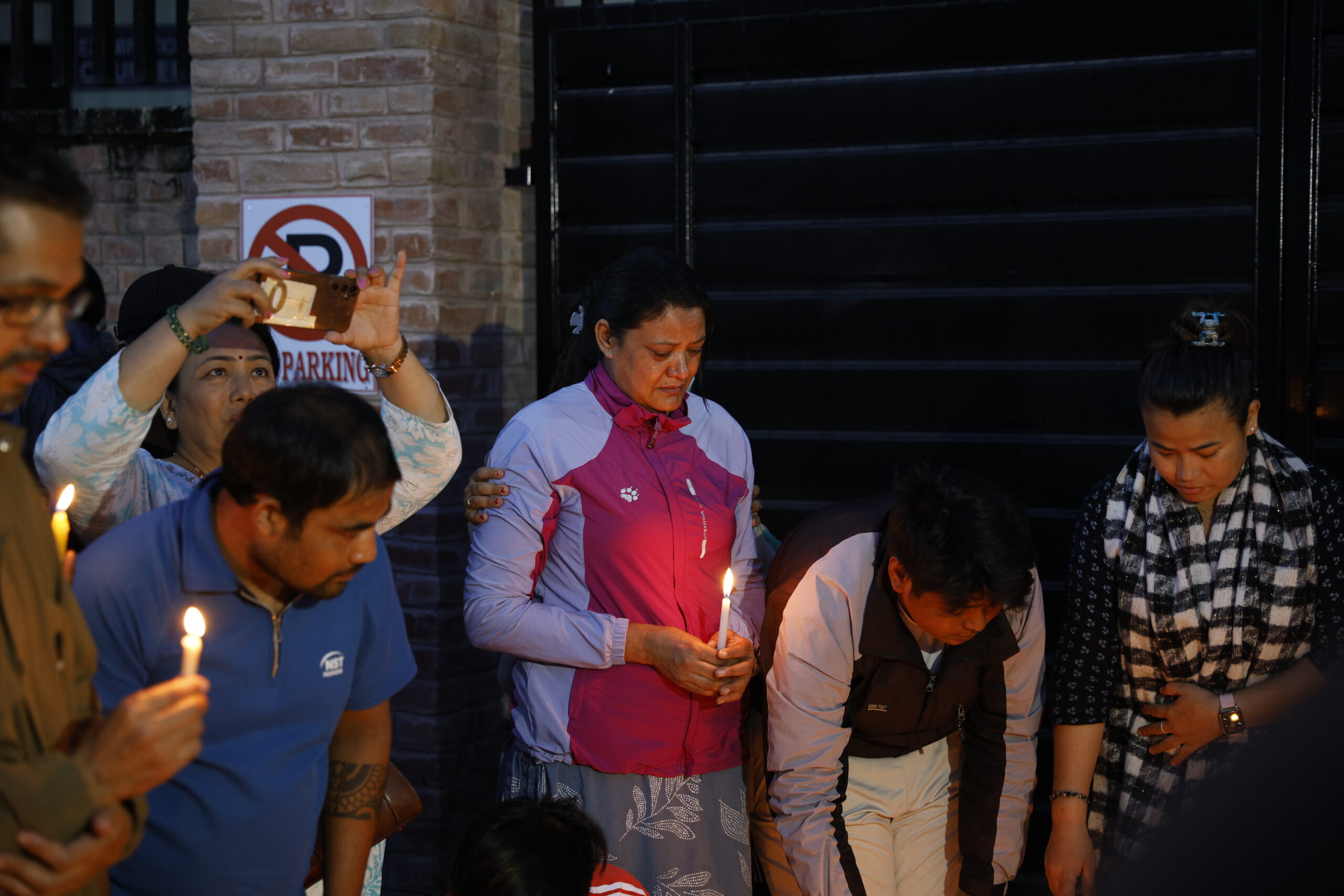
In Nepal, a sweeping Gen Z protest movement triggered by a nationwide social-media ban made international headlines and forced the resignation of Prime Minister KP Sharma Oli after a deadly crackdown killed more than 70 people. The appointment of former Chief Justice Sushila Karki to lead an interim government came after intense negotiations involving Gen Z leaders and civil society. Youth mobilisations reshaped constitutional processes, raising vital questions about democratic transitions, accountability and separation of powers.
The future of youth protests
As governments turn to censorship, surveillance, and other forms of repression, young people are developing innovative digital tactics to sustain engagement, amplify their demands, and coordinate action across local and national levels. At the same time, the intersection of street mobilisation and digital organising is growing stronger.
It is crucial that civil society actors and activists have reliable access to digital technologies and can operate freely and securely online. Protecting this space from censorship, online manipulation, disinformation, and attacks on digital rights ensures that movements can organise, communicate, and advocate for democratic participation.
“Gen Z movements are employing a wide range of strategies to safeguard freedom of expression on social media. One of the most interesting is the use of AlgoSpeak, nonstandard words, spellings, or emojis used to challenge or evade unfair algorithmic moderation on platforms like TikTok. For example, activists might use ‘@b0rt!0n’ instead of ‘abortion,’ ‘clock app’ instead of ‘TikTok,’ or watermelon emojis to reference Palestine, parallel forms of coded language are emerging in multiple languages and cultural contexts,” says Daniela Rincón, Policy Officer at Democracy Reporting International.
“Gen Z is also among the generations most active in adopting privacy-protective practices such as clearing cookies, using anonymous browsers, and relying on VPNs. There is much that civil society can learn from these approaches, which model a more conscious -and more strategic- engagement with the digital world.”
Youth leaders are thus participating in shaping the architecture of the future of an enabling environment for civil society through hybrid mobilisation, anti-corruption, anti-nepotism and pro-rights agenda coupled with insistence on systemic transformation.
Yet significant risks remain across all dimensions of an enabling environment, as highlighted by recent EU SEE alerts. Digital surveillance and disinformation is commonplace, but also restrictions to peaceful assembly, constraining independent media, criminalising dissent, and relying on militarised policing to deter mobilisation. The machinery of “repression” has also turned into the machineray of resistence and organising – creating transnational movements. Gen Z is no longer waiting for institutions to deliver democracy, they are practicing it through horizontal forms of leadership and clear demands.
Conclusion and recommendations
The surge of protest movements in 2025 has challenged governments to deliver democracy and be accountable to their people – but it has also challenged donors to reconcile their rhetoric with their actions. The below recommendations offer ways to support civic mobilisation for democratic values:
- Using sanctions: In an increasingly tense geopolitical environment, they can be used as measures of last resort. Evidence shows that sanctions put pressure on non-democratic actors and can be successful in supporting democratic norms.
- Supporting civic society organisations: While it is difficult for the international community to support protests like those discussed in this article, there are more indirect means of supporting emerging democratic movements. These include providing core funding to organisations that protect freedom of association and assembly or that provide legal aid to protesters treated unfairly by law enforcement.
- Supporting media freedom: Civic mobilisation can be supported by supporting media freedom and speaking out against media repression. Whether pro-democratic movements succeed or not, the media is key for informing citizens about developments, and investigative journalism is vital to uncover corruption and police brutality.
- Flexible funding: It would be beneficial for donors to adapt their programming and reporting guidelines to respond to the rapidly changing – and increasingly challenging – political environment facing civil society organisations. This would enable local actors to respond to emerging threats, seize unexpected opportunities, and maintain continuity in their work.
- Stronger and prompt international structures for legal support, reallocation and safety of the activists: Structures are needed to protect at-risk activists, including rapid legal assistance for those facing harassment or politically motivated charges, clearer relocation or asylum pathways when safety is threatened, and coordinated monitoring mechanisms that can quickly verify abuses and trigger protective action.